
Image Credit: YASA.
Here we go again… Just when you thought the world of electric vehicles had reached a plateau of soul-crushingly silent speed, along comes some brilliant, slightly mad engineers from a company called YASA to casually rearrange the laws of physics. They've decided that 1,000 horsepower from a whole car is just adorable and instead slapped that much power into a single, tiny motor per wheel.
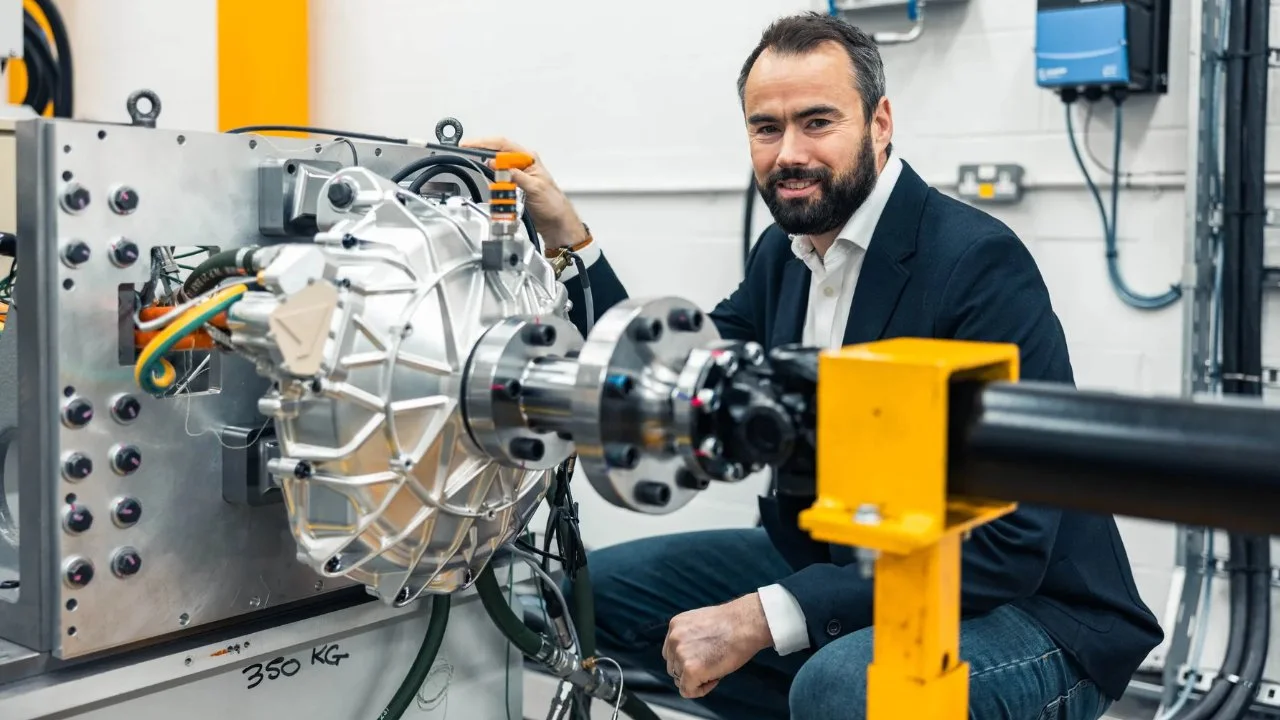
I first told you about YASA's wizardry back when they were setting records with their unbelievably light motors. Remember the one I called "Magic or brilliant British engineering"? And the article about them shrinking the motor again? Well, they're still at it, only now they've taken their axial flux motor - a clever, disc-shaped thing that looks like a high-tech kitchen whisk that spins sideways - and stuffed it right into the wheel hub.

Image Credit: YASA.
Most EVs today use those boring, cylindrical radial motors. YASA, however, is having a go with a design that dates back to the 1820s, which is fantastic because if it was good enough for some bloke in a top hat two centuries ago, it's good enough for your next electric hyper-thing.
The secret sauce is its power density. In July, YASA set an unofficial world record with a prototype motor. It weighed only 28.9 pounds and delivered over 737 horsepower. That gave them a power density of about 25.5 horsepower per pound. Think of it: a motor that weighs less than a chubby toddler is more potent than a classic V12.
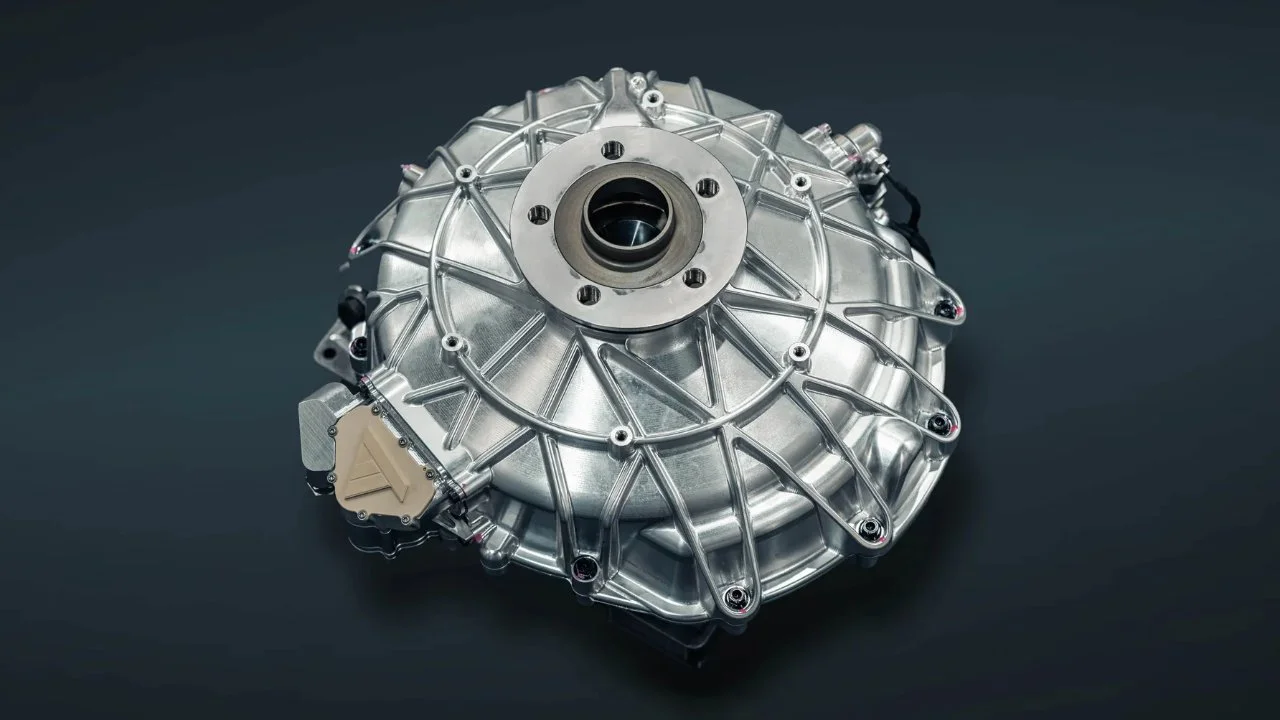
Image Credit: YASA.
But because breaking one record is amateur hour, they broke their own record just a few months later. The latest, slightly lighter prototype motor - tipping the scales at a scant 28 pounds - was run on a stronger dynamometer. It spat out over 1,005 horsepower in a short burst, which means the power density jumped all the way to 35.9 horsepower per pound. That, my friends, is supposedly triple the performance density of the best radial motors out there. This is where I start getting gently skeptical, but my skepticism is quickly drowned out by the mental image of the violence this thing will unleash.
The whole point of this record-smashing exercise was to prove that their technology is ready to be put where the action is: inside the wheel. This is a world's first - a mass-neutral in-wheel motor that is compact, powerful, and thankfully, light enough to sit in a wheel.

Image Credit: YASA.
What does this actually mean for the rubber on the road? Each of these little motor-wheels can deliver up to 1,005 horsepower. If you put four of them on a car, which is the only sensible thing to do, you're looking at a grand total of roughly 4,020 combined horsepower.
Seriously, over 4,000 horsepower in a road car. That's no longer a car - that's an angry jet fighter disguised as a car. You'd need a blood-transfusion-ready support crew just to survive the acceleration. Most speedy battery electric vehicles today need three motors combined to get anywhere near the 1,000 horsepower, and here YASA is, giving you that number per wheel. What are we going to do with all this power? Drag race airplanes?

Image Credit: YASA.
Putting big, heavy motors inside the wheel is usually a very bad idea. It creates what the nerds call unsprung weight, which is the mass not supported by the car's suspension. Strapping lead boots to an Olympic sprinter comes to mind… That dead weight absolutely wrecks the handling. That's why YASA's CTO, Tim Woolmer, says in-wheel motors are a major challenge.
But YASA's axial flux design is so powerful and so incredibly light that they've managed to create the world's first mass-neutral in-wheel motor. It's compact and light enough to negate the traditional penalty. YASA has also developed a powerful new dual inverter that weighs just 33 pounds and manages an astonishing 60.8 horsepower per pound power density.
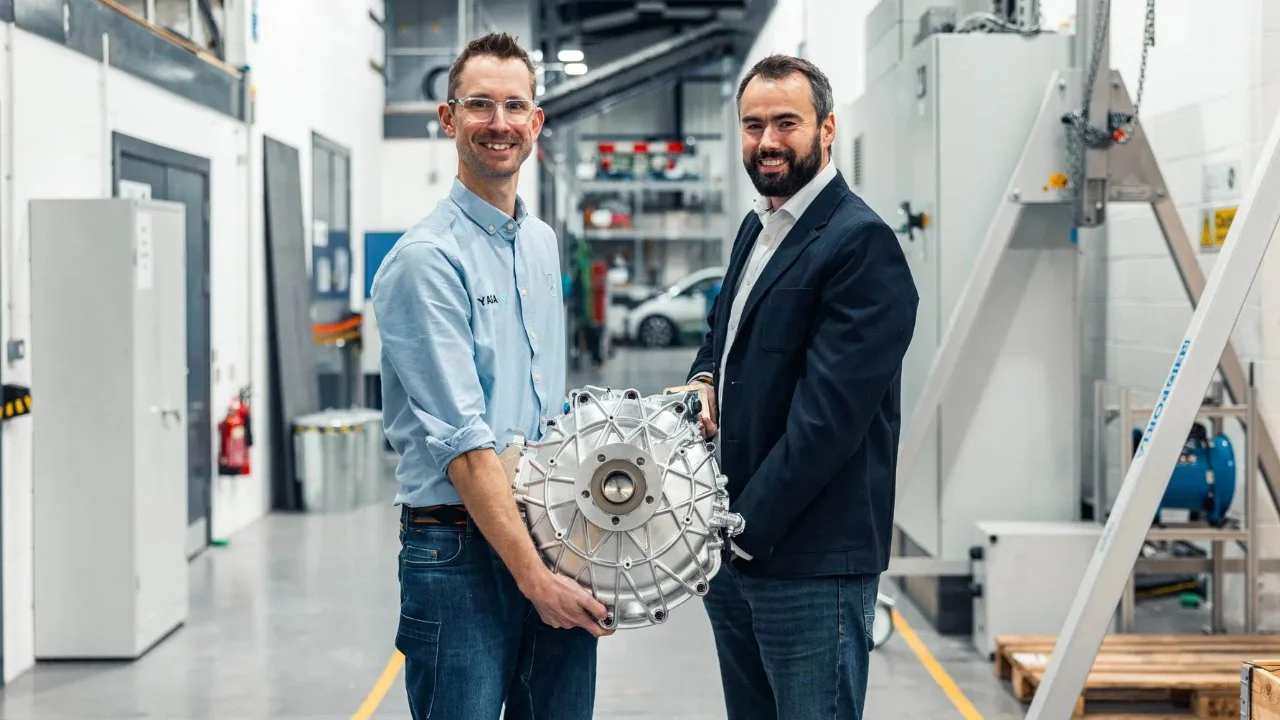
Image Credit: YASA.
Another amusing side-effect? The regenerative power of these motors is so potent that YASA thinks it could lead to downsizing the rear brakes, or maybe even eliminating them entirely. Can you imagine a car with 4,000 horsepower that barely needs friction brakes? The lawyers will love that. The CEO, Joerg Miska, says this technology is the "gateway to lighter, more efficient, and higher-performance electric vehicles", and you know what? He's probably right.
Look, I might be a scribe, but I know how much work it used to take to get a 1,000-hp car. I had a 1,100-hp Mazda RX7, which took years to build. If my wife actually knew how much money went into creating that wild chariot, she would have divorced me three times by now.
Building it was one thing - putting down that much power was an entirely different story. I had 18" 325 sticky rubber on the back, and even that wasn't enough to make any use of the 1st and 2nd gears. I had to nurse the car to about 40 mph, and put it in 3rd as early as possible to get any traction… The back would step out at any speed the moment turbos kicked in - it was a death trap.

Image Credit: YASA.
Why tell you this story? Because now you can just slam $75,000 down and get a 1,500-hp Xiaomi SU7 Ultra from China. $100,000 buys you the fastest Tesla. The 1,000-horsepower mark suddenly became a norm in a family car thanks to automakers like Lucid. But it is a ridiculous number that has no point in everyday life, which is the main reason I love it so much. And now YASA made it look ridiculous and inadequate next to its electric pancake.
I thought BYD pushed the boundaries with the 3,000 horsepower U9 Xtreme, but clearly - I was wrong. To get this kind of power from an old-school fire-breathing engine, you'd need displacement, a collection of turbos, and an uncle high up in the oil company. You'd need a team of mechanics to keep this thing working for about 2 minutes, and then another team to rebuild it. YASA just created a motor that you can carry in a backpack, slot it in a wheel with a couple of wrenches, plug it in, and go chasing world records. The world has gone positively mad.
It's all in the prototype stage for now, but they claim the system is already compact, scalable, and designed with cost efficiency in mind, so it's not just a lab experiment. They promise more updates in 2026. I'm not sure if I'm excited or terrified. I think a bit of both.
Enjoyed the article? Give us a 'LIKE' and FOLLOW us on MSN! We're tracking the electric future... even if it's still buffering.
