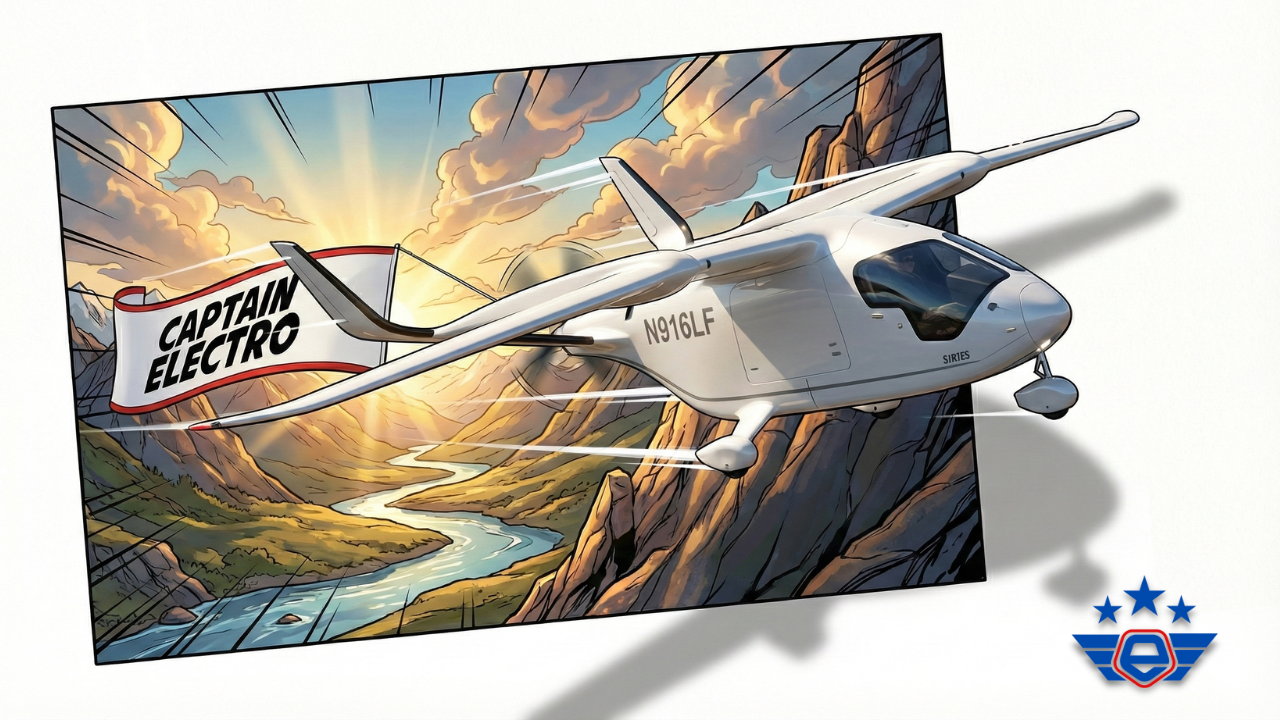
Image Credit: Captain Electro.
If you've spent any time at all looking up - and I assume you have, unless you're perpetually staring at your shoes - you've likely noticed that the grand, flying metal tubes we rely on for international misery tours are mostly spewing great clouds of stuff into the atmosphere. And not the pleasant, fluffy kind of stuff, but greenhouse gases, sulfur oxides. Those little white streaks in the sky might make us all feel like we're living inside a cheap sci-fi movie, but air travel is one of the greatest vehicular culprits in making our planet feel just a tad too warm. But a solution is on the horizon, and it's being tested by a major carrier in a place that already looks suspiciously like paradise.
While the rest of the world is arguing about whether electric pickup trucks can tow a yacht up a hill, Air New Zealand - the airline that probably sends you pre-flight safety videos featuring hobbits - is dipping its toes into the zero-emission future. They've launched a four-month "intensive proving program" to test both pure battery-electric and hydrogen-powered aircraft. It's an idea that CEO Nikhil Ravishankar essentially summarized by saying, "New Zealand is basically a giant, lush electrical socket," given that 85% of their grid is already renewable. And since about 60% of their regional hops clock in at less than 217 miles, they've got routes that perfectly suit the current limitations of battery technology. It's like they designed the country specifically for this. Clever Kiwis.
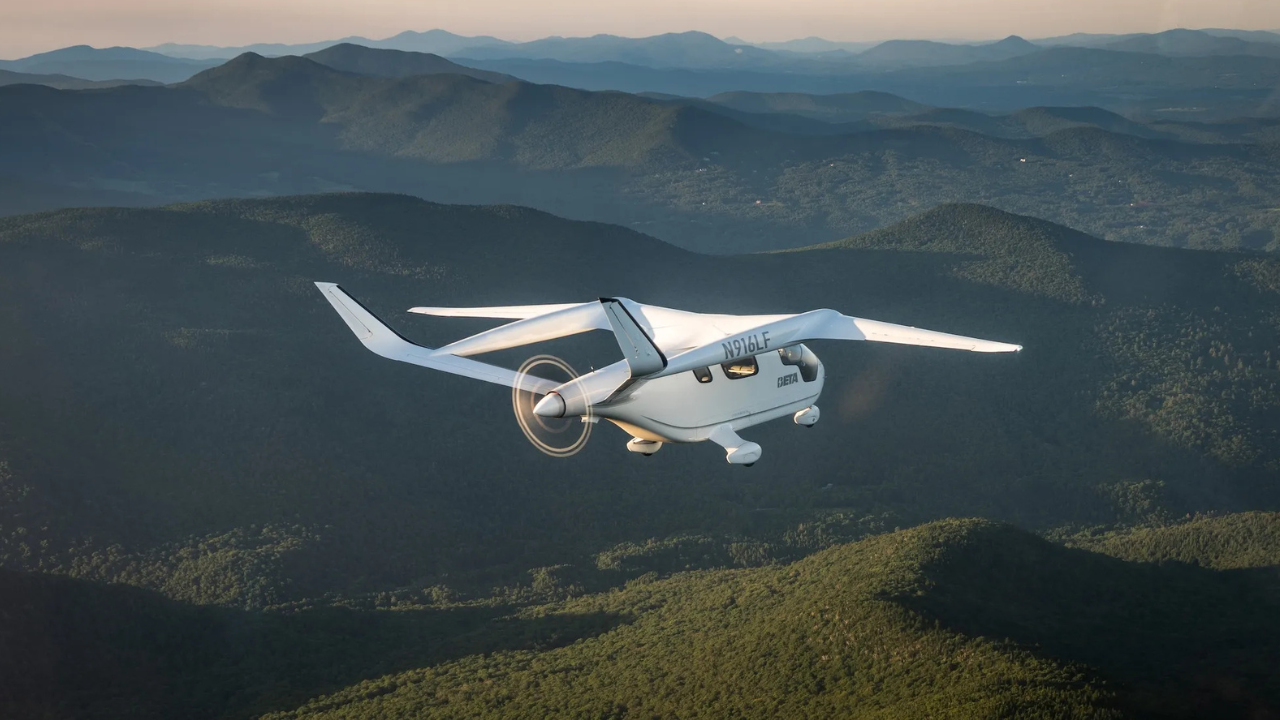
Image Credit: Beta Technologies.
Our main focus today, the poster child for this low-altitude revolution, is the oddly compelling ALIA CX300. This is an all-electric conventional takeoff and landing (eCTOL) aircraft dreamt up by a bunch of clever sods in the United States at BETA Technologies. Conventional takeoff means it still needs a runway, which is a relief for those of us who dread the idea of a giant, flying toaster oven trying to land itself on a dime in the backyard. The CX300 looks… different. Like a cartoon Arctic Tern that swallowed a cargo box whole. Its wingspan is exactly 50 feet across - which is longer than your average bowling alley - and it's designed to be a workhorse, not a glamour model.
Despite its utilitarian appearance, the specs are genuinely impressive, and not just because I'm easily excited by anything that doesn't involve pumping noxious fuel into an engine. Powering this carbon fiber curiosity is a single H500A electric motor, driving a pusher propeller at the back. When you stomp on the imaginary go-pedal, that motor can punch out a rather hearty 528 horsepower for takeoff. That's more grunt than some American V8 muscle cars, only this is hauling 6,000 pounds of airplane (and its battery) into the air. As for acceleration? Well, it's an airplane, not a hot hatch. There is no official 0-to-60 time, because who is racing a cargo plane off the ground? The top speed is a brisk 176 miles per hour - perfectly rapid for those regional flights, but unlikely to make the fighter pilots jealous.
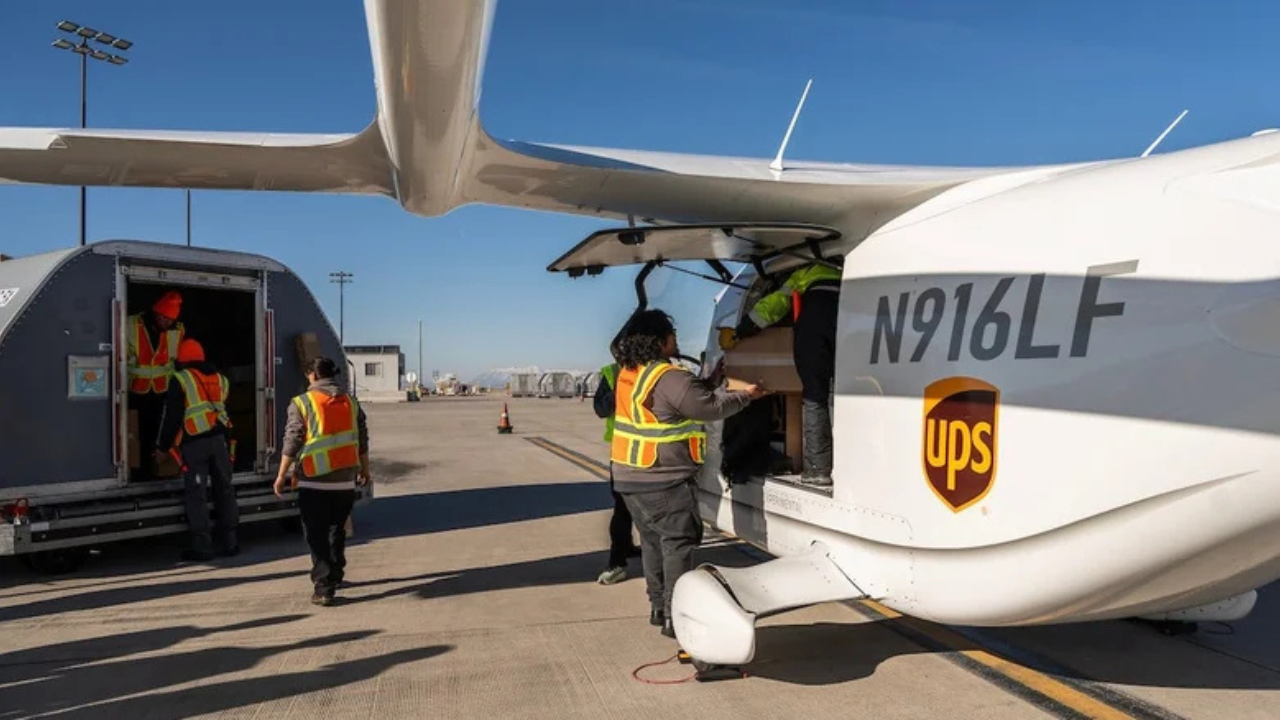
Image Credit: Beta Technologies.
The real engineering marvel, and simultaneously the biggest headache, sits inside the structure: the battery. The ALIA CX300 drags around a total of 225 kilowatt-hours of electrical storage, split across five individual battery packs. If you think your electric car battery is heavy, try strapping nearly 2,810 pounds of lithium-ion to the chassis of a light aircraft. That is the one inescapable truth of electric flight right now: the fuel is heavy, and unlike jet fuel, the aircraft doesn't get any lighter as it travels. It's a colossal physics problem that BETA seems to have mostly solved through aerodynamic witchcraft and willpower.
The range, however, is where it all starts to make beautiful sense. Officially, BETA has demonstrated the ability to fly the ALIA for a maximum of nearly 387 miles. That's enough to get from New York City to Pittsburgh, Pennsylvania, in one go. Crucially, the practical range for Air New Zealand's target routes is less than 217 miles. This generous overlap means the ALIA can handle the route with substantial energy reserves, a necessity when flying over those vast, turquoise stretches of water. It means the aircraft can fly multiple routes daily, thanks to the rather incredible one-hour recharge time. Think about that: you land, drop off your cargo, plug in for the duration of a lunch break, and you're good for another few hundred miles.

Image Credit: Beta Technologies.
But the part that will make every Cessna 208 operator weep silently into their leather flight jacket is the running cost. BETA proudly states the energy cost for the ALIA CTOL is a paltry $18 per hour. Compared to the typical operational costs of a combustion-engine plane like the Cessna, which can run you $347 per hour just for fuel and maintenance, this electric thing is basically free to run. It's so cheap, you could almost use the savings to hire a small band to play cheerful music every time you land.
The biggest argument for the ALIA isn't what it can do on paper, but what it has already done in the sky. The team at BETA has relentlessly flown their electric fleet a monumental distance: over 115,080 miles. That's circling the Earth more than four times, which is a lot of nautical miles for a startup. ALIA landed at over 380 airports, from the absolute chaos of JFK and Atlanta Hartsfield to the tiny municipal strips that actually keep regional America running. It has done it in rain, sleet, snow, fog, dust, and peak summer heat. And here's the best bit: their operational flights have matured from needing a trailer full of spare parts and a chase plane full of mechanics in 2023, to just a solitary pilot onboard for the latest cross-country missions. That's a reliability curve to be proud of.

Image Credit: Beta Technologies.
So, is this the future? Almost certainly. Does it solve all the problems? No way. The energy cost is phenomenal, but the actual purchase price of the ALIA is the sort of figure that requires you to "contact sales," which in my experience is always a polite way of saying "prepare your accountant for a fainting spell." These machines are not cheap. The transition will be slow, especially for the massive, long-haul jets that are currently guzzling half the Earth's oil supply just to fly from London to Los Angeles. Hydrogen will have to solve that long-distance equation, and hydrogen technology has its own peculiar set of challenges - mostly involving making sure the giant, highly flammable tanks don't actually explode.
But for New Zealand, with their short routes and nearly limitless renewable energy, this electric cargo hauler is a sensible upgrade. The ALIA CX300 may look like the result of a slightly awkward mating ritual between a motor glider and a shipping container, but it's reliable, and it's saving a fortune every hour it flies. If the goal is a cleaner, quieter regional sky, this machine, with its 50-foot grin and powerful, invisible electric thrust, is leading the way.
Enjoyed the article? Give us a 'LIKE' and FOLLOW us on MSN! We're tracking the electric future... even if it's still buffering.
