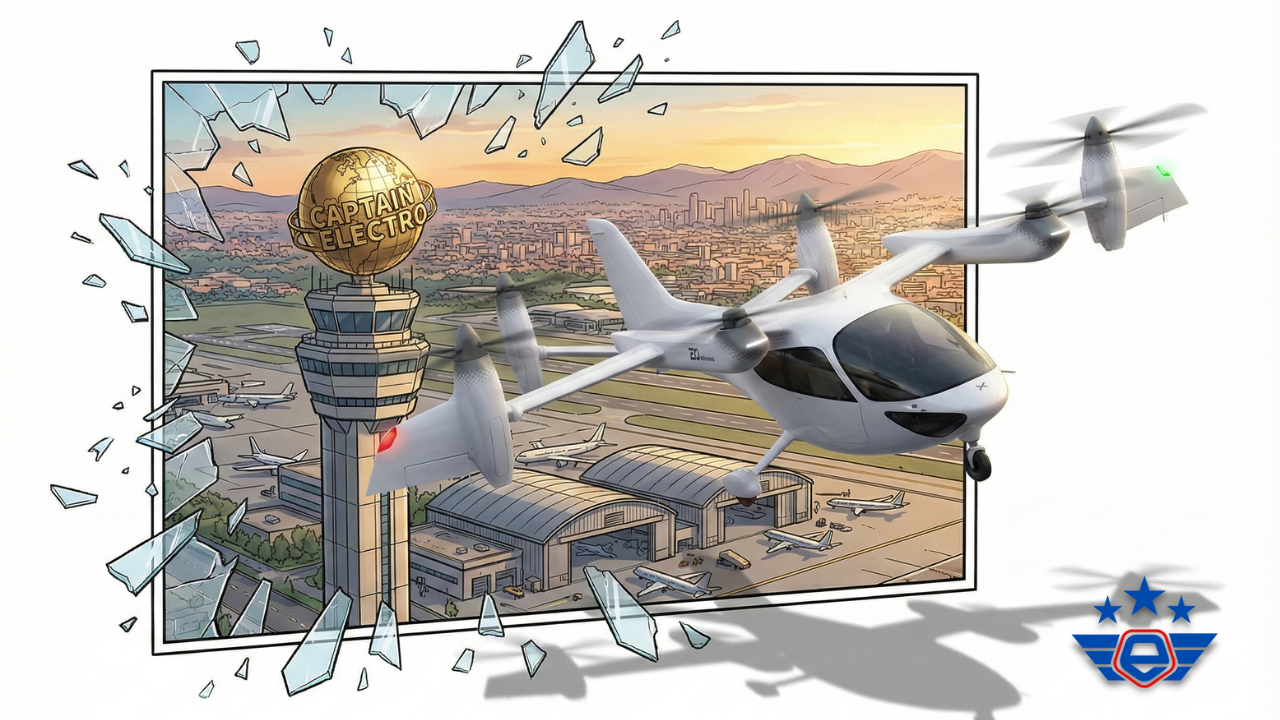
Image Credit: Captain Electro.
When an engineer tells you they've designed something that can defy gravity, go very fast, and charge quicker than a phone after a software update, you should probably check your wallet and your blood pressure. But here we are, staring down the barrel of another electric vertical take-off and landing machine, and this time it's from Shanghai, courtesy of a firm called TCab Tech. They've just completed the "transition flight" for their full-scale demonstrator, the E20, and I'm only slightly annoyed I didn't get to film it.
If you're wondering what a "transition flight" is, it's the aerial equivalent of watching a caterpillar turn into a butterfly while juggling flaming torches and solving a Rubik's Cube. It's where the aircraft stops being an oversized drone hovering nervously over the ground and starts behaving like a proper airplane, building up enough forward speed for the wings to actually work. For an eVTOL, this is the moment where it switches from burning through its electrons like a drunken sailor to sipping them like a connoisseur of fine electric vintages. The E20 has just managed this complex maneuver, shifting from helicopter-mode to plane-mode, and it's a big, fat, certified gold star on their homework sheet.
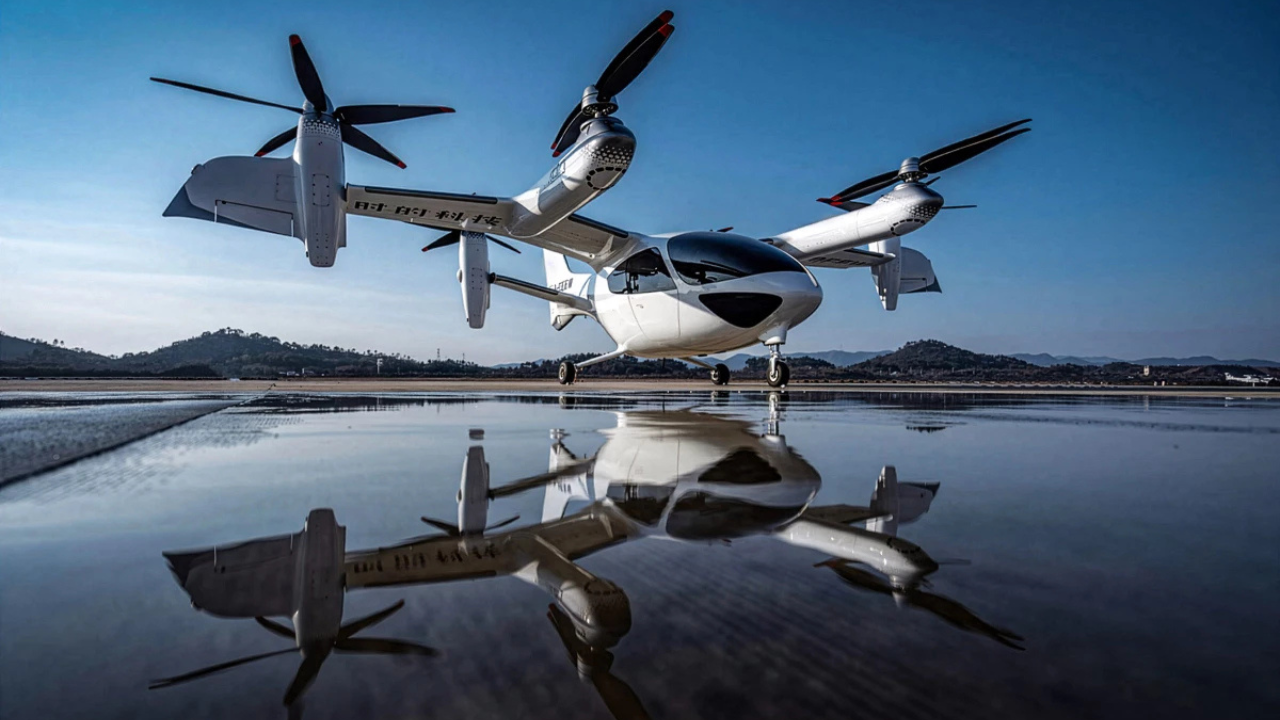
Image Credit: TCab Tech.
The real fun part of this E20 machine is its propulsion system, which I can only describe as the result of a very enthusiastic meeting where no one could decide on a single design. It's a Frankenstein's monster of aerial engineering. Some eVTOLs use separate fixed propellers for lifting and then cruising - a "lift-and-cruise" setup. Others go for the "vectored thrust" route, where the rotors themselves tilt. The clever chaps at TCab said, "Why choose?"
The E20 uses a fascinating, almost chaotic, blend: four tilting propellers for the thrust-vectoring fun, and two fixed stacks of coaxial vertical lift props for good measure. Just to confuse us all, those outer tilting props even have a bit of wing tacked onto the end, tossing in a dash of "tilt-wing" for extra spice. They literally designed this machine by throwing darts at a board labeled with all the possible VTOL concepts. It has a total of six motors and rotors, and with four separate battery packs, the redundancy is so thick it feels like they're trying to overcompensate for something. If it had any more backup systems, it'd come with its own mechanic riding shotgun.

Image Credit: TCab Tech.
Once this electrical mash-up finally decides to get a move on, it sheds its hovering shame and enters proper cruise. The E20 can hit a top speed of nearly 199 miles per hour, and the stated range is a perfectly acceptable 124 miles - more than enough to leapfrog the most irritating freeway traffic jam and deposit you on a rooftop miles away.
The entire package is designed to haul a pilot and four passengers in what they call 'luxury.' Now, 'luxury' in a small, electric flying machine is usually code for 'you won't have to sit on a milk crate,' but with gull-wing doors and 270-degree panoramic glass, you'll certainly feel like you're attending a very expensive opera while you're stuck in the sky. It even has a separate luggage compartment, meaning your briefcase won't be tapping you on the head during a bumpy landing.

Image Credit: TCab Tech.
Of course, the big electric question is always: how long to fill up the tank? And this is where the E20 really gets my skeptical eyebrows wiggling. They've boasted an 800-Volt fast-charging system that can take the batteries from a worrisome 20% charge to a far more cheerful 85% in just 20 minutes. That's a rapid turnaround, allowing these aerial taxis to get back to ferrying executives and their oddly large hats without too much downtime. If they can truly deliver on that, it's a massive win for the concept of air-taxi services.
The company has been a bit coy about the retail price of a single unit - because I'm sure you were planning to buy two - but the estimates put it at around $960,000. Call it a little under a million bucks for your very own flying circus tent. TCab just bagged itself a cool $42.4 million in its seventh funding round, which is a lot of money to spend on testing to prove your machine can stop acting like a confused hummingbird.
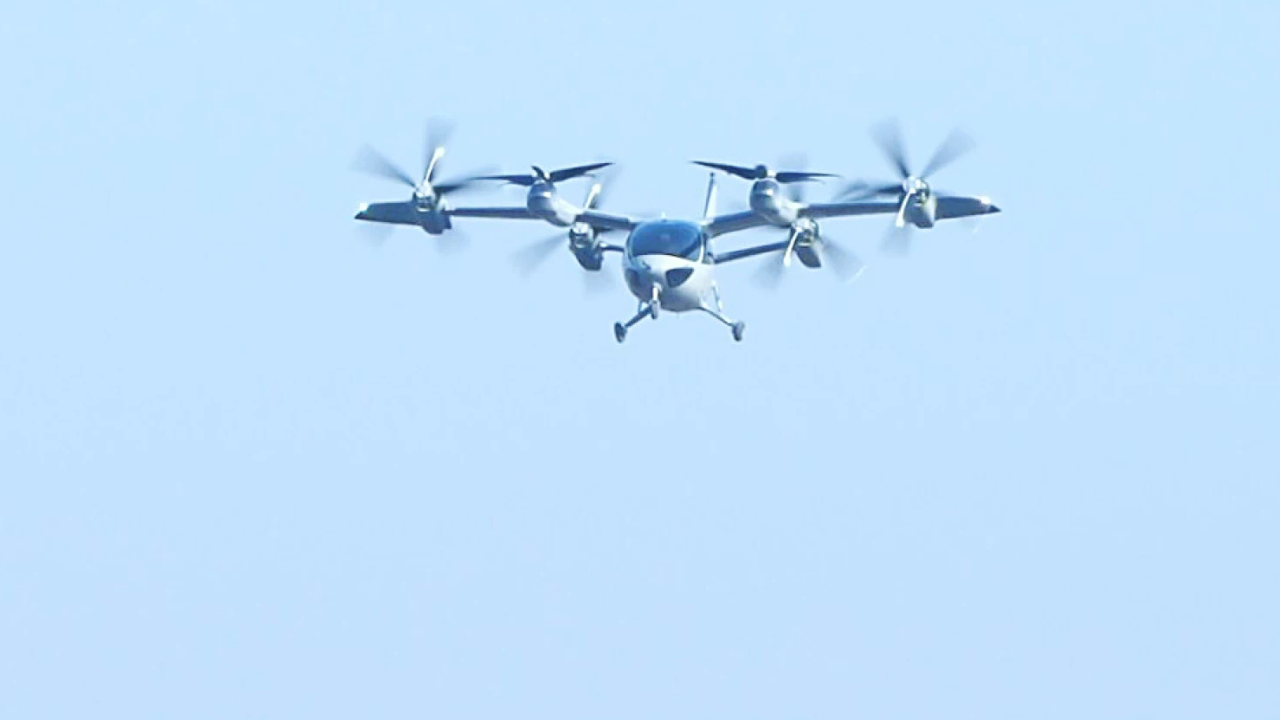
Image Credit: TCab Tech.
TCab Tech is now joining a crowded air up in China, where their rivals, like eHang, are already certified and taking paying passengers for little scenic tours. The whole dream is to eventually turn these things into the transport of the future: a way to cut down your horrific commute to a brisk, airborne dash. Flying is one thing, but the real challenge is building the landing spots, the charging infrastructure, and convincing people that they want to be flown over a busy metropolis by a computer-controlled aerial washing machine.
I've always said that the path to the future is paved with good intentions and the occasional fiery prototype, but the E20's successful transition flight is genuinely a step forward. It proves that this multi-limbed, multi-concept electric flying machine isn't just a PowerPoint presentation with rotors attached. It's a genuine, working air-vehicle, and in a few years, one might just be delivering you from the airport straight to your meeting, giving you more time to complain about the experience.
Enjoyed the article? Give us a 'LIKE' and FOLLOW us on MSN! We're tracking the electric future... even if it's still buffering.
