Image Credit: Electra.
I've spent more of my life in airports than I really want to admit. The forever-gray corridors, the stale sandwiches that cost more than a tank of gas, the seemingly endless march to a gate that's always - and I mean always - miles away from security. That future of p air travel, a glorious Jetson-esque world where we skip traffic jams in our flying cars? So far, all we've gotten are more expensive peanuts and longer queues.
So, when a company called Electra pops up and says they've built a plane that can take off from a patch of grass the size of a suburban backyard, my sarcasm-meter starts twitching uncontrollably. Oh, brilliant. Another one. Except… hang on. This one might actually have a point. A very, very short point. Much like its runway.
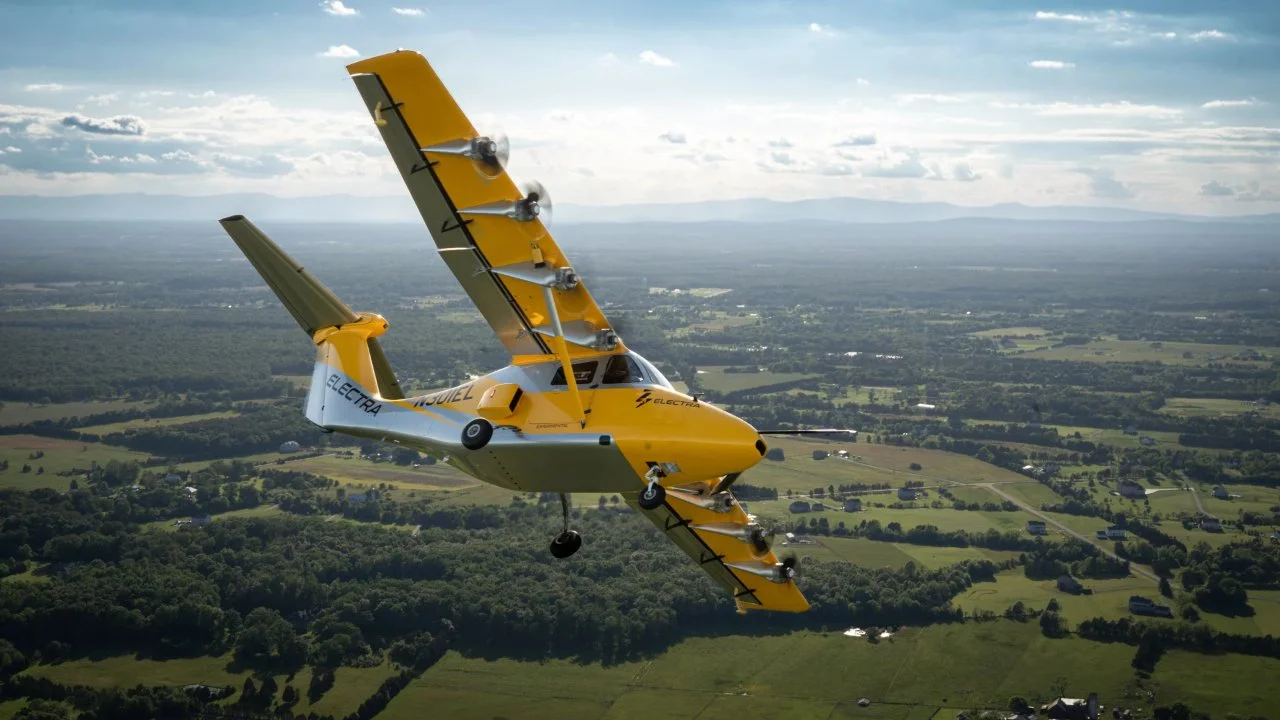
This is a real, flying prototype called the EL-2. And it recently showed off its party trick in public for the first time down at Virginia Tech. The big claim to fame is its STOL capability – that's Short Take-Off and Landing for those of you not fluent in aviation acronyms. How short? Try a runway just 300 feet long. That's not a runway - that's a decent throw of a baseball.
How does it perform this bit of black magic? The secret sauce is something called "blown lift." Along the front of the wing, you'll find not two, but eight electric propellers. These props blast a massive amount of air over the wing and onto enormous flaps at the back. The result is that the wing starts generating lift at ridiculously low speeds. This thing can get airborne at just 35 miles per hour. I've had rental cars that struggled to get to 35 mph.

Image Credit: Electra.
Powering this fleet of propellers is, of course, the new religion of mobility: electricity. It's a hybrid-electric system, which is the first sensible thing I've heard. The initial burst for take-off, which needs a huge gulp of power, comes from the batteries. Once it's up and cruising, a small, quiet turbogenerator fires up to sip fuel, run the props, and top off the batteries. It's the aviation equivalent of a Toyota Prius, and I mean that as a genuine compliment. It's practical.
During their public demos, the Electra team didn't just use a nice, pristine 300-by-75-foot paved surface. That would be deemed too easy, so they showed off by taking off and landing on a patch of grass. And then, just to really make a point, they used an access road… Landing a plane on an access road is a move of supreme confidence. I do hope they sent a chap out first to check for potholes.
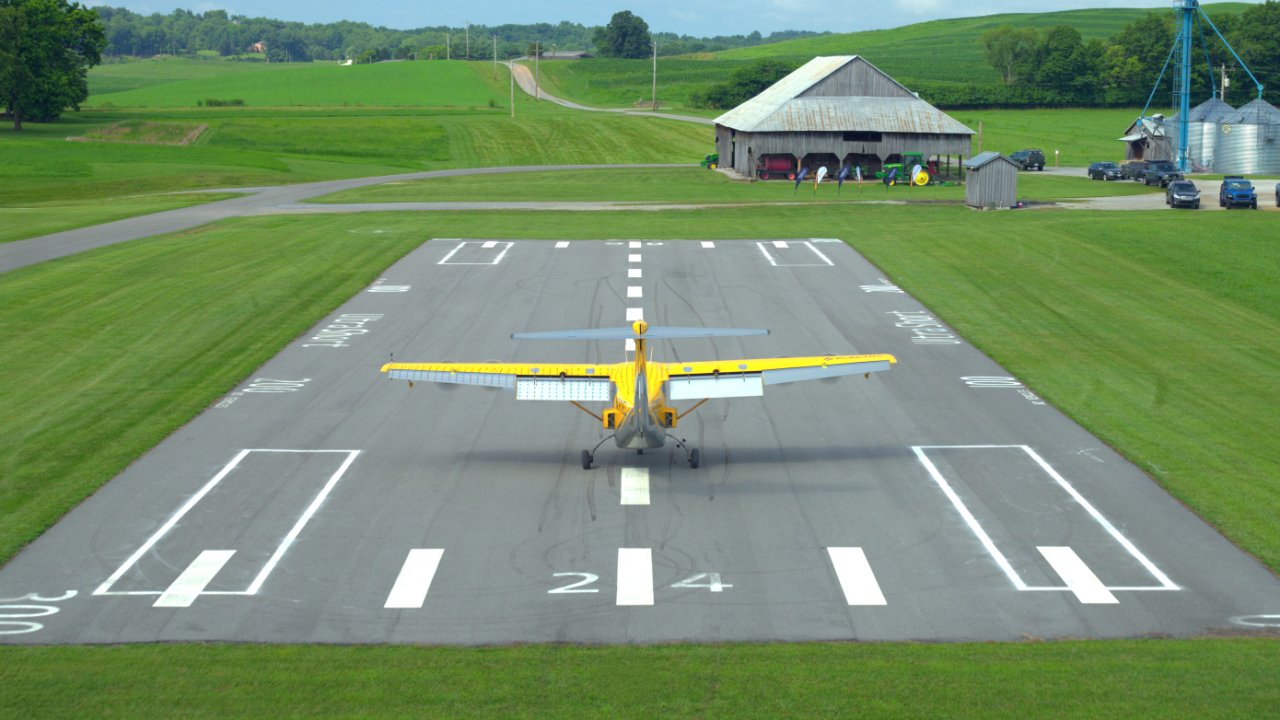
Image Credit: Electra.
So, what's the big idea here? According to Electra and their partners at Surf Air Mobility, it's about bringing air travel closer to where people actually are. Instead of driving for an hour to a massive, centralized airport, you could pop down to a small "vertiport" or "airpark" in your town. The flights would be shorter, point-to-point hops - New York to the Hamptons, or Los Angeles to a resort in the desert - without the misery of the I-405.
Electra claims their aircraft will run at a third of the cost of a helicopter. A third. Helicopters are fantastically useful machines, but they are outrageously expensive, noisy, and mechanically complex. If you can offer 90% of a helicopter's convenience for 33% of the price, you're not just building a new plane - you're building a whole new market. It's quieter and cleaner, too, which will please the neighbors no end.

Image Credit: Electra.
The two-seat prototype is just the appetizer, of course. The main course is the planned EL-9 Ultra Short, a nine-passenger commercial aircraft. This is what has operators from around the globe whipping out their checkbooks. Electra says they have over 2,200 pre-orders from more than 60 operators. That's a staggering vote of confidence in a machine that, until recently, was just a promising concept.
But you know me... I think pouring a small glass of cold water on this electric bonfire of optimism is in order. The company promises commercial flights by 2029. That's quite a few years away, and between now and then lies the terrifying, multi-headed dragon known as government certification. That long, expensive, and paperwork-heavy process is designed to make sure things don't just fall out of the sky. But the fact that they have a flying prototype that does exactly what they said it would is a massive leap in the right direction.
For the first time in a long while, I'm looking at one of these "future of aviation" projects and not immediately rolling my eyes. The technology is clever but grounded in proven aerodynamics. The hybrid power system is a smart, pragmatic solution. The business case of replacing helicopters is rock-solid. It's not a flying sports car for billionaires; it's a flying minivan for the rest of us.
