Image Credit: Elevate Racing.
The promise of the shimmering flying car, the futuristic carrot dangled just ahead of us, has always been about five years away. There is progress. Now, we have a new name for it: the eVTOL, or electric Vertical Take-Off and Landing aircraft. It sounds all so clever, and the concept art always shows impossibly handsome people soaring over gleaming cities.
The reality, however, is a bit more complicated. These things are eye-wateringly expensive, and the number of rules, regulations, and men in drab suits you'd have to get through to fly one over a city is simply terrifying.
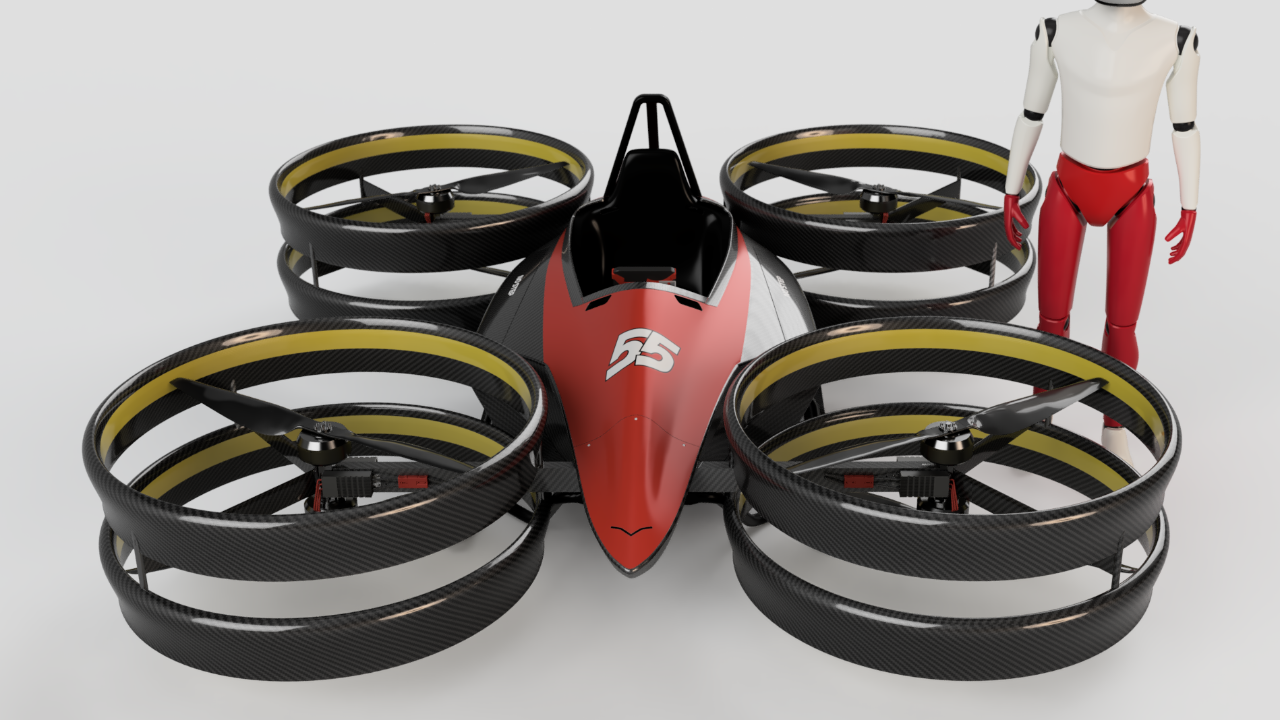
Image Credit: Elevate Racing.
As I was about to file the whole idea under "Nice try, but call me when it's real," along comes a British startup called Elevate Racing with an idea so brilliantly simple, so elegantly logical, that I'm kicking myself for not thinking of it first. They've looked at the magnificent, complex, high-performance eVTOL and said, "You know what? Let's not use this for commuting. Let's use it to have an absurd amount of fun."
Their creation is the AirKart, and it does exactly what it says on the tin. It's a go-kart for the air. Instead of trying to solve urban congestion - a task that has defeated far greater minds - the AirKart is designed for one thing: racing your friends around a closed course. By taking the flying car off the public street and putting it on a private track, they've neatly sidestepped about a million regulatory headaches and, in the process, made personal flight genuinely accessible.

Image Credit: Elevate Racing.
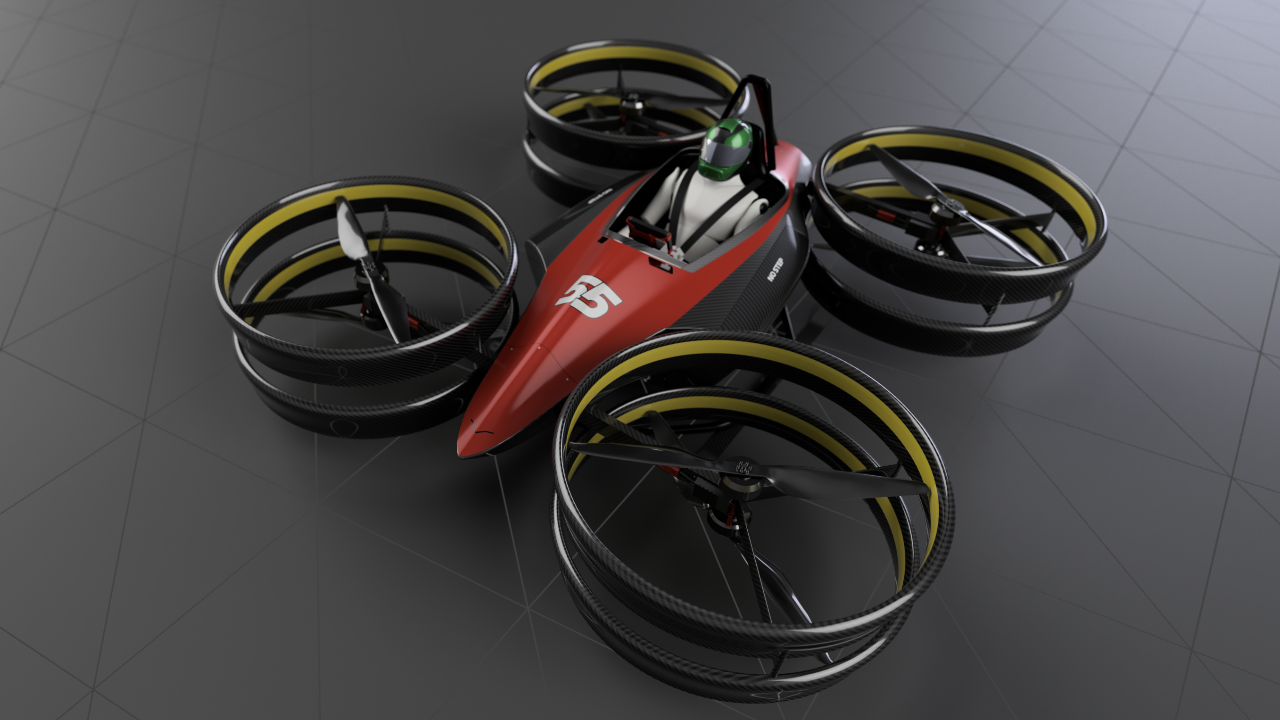
So what is this thing? Imagine an F1 car's monocoque, crafted from a cocktail of carbon fiber and Kevlar, mixed with a very, very powerful drone. It's a single-seater, open-cockpit machine designed for agility and speed, not for popping down to the shops for a pint of milk. It looks purposeful, raw, and plain brilliant. It's a proper bit of kit for having a laugh.
You might look at it and see four big propellers, but your eyes deceive you. It actually has eight ducted coaxial props stacked in pairs. This isn't just for show. It's a wonderfully sensible piece of engineering that means the AirKart can lose up to four of its eight motors and still land you safely. That's a level of redundancy that provides a nice, warm, fuzzy feeling when you're considering strapping yourself into what is, essentially, a flying chair.

Image Credit: Elevate Racing.
The best part? You almost certainly won't need a pilot's license to fly one. The folks at Elevate Racing plan to build dedicated "AeroKarting" tracks where these machines will be electronically fenced in. The AirKart will be limited to a top speed of 62 miles per hour and a maximum altitude of about 1,300 feet. That's fast enough to get the adrenaline flowing but slow enough to keep the authorities from having a conniption.
For most of us, there's an "EasyFly" mode. Using a symphony of GPS and LiDAR, the machine basically flies itself. It will avoid obstacles, land with the single press of a button, and generally prevent you from making a fool of yourself. As the founder, Marcin Michalczyk, puts it, they'll slowly unlock more performance as you get better. You'll start with basic turns and then, once you've proven you can handle it, they'll let you off the leash. For the seasoned pros—or those with an overabundance of confidence—a full-manual "Sport Mode" awaits.
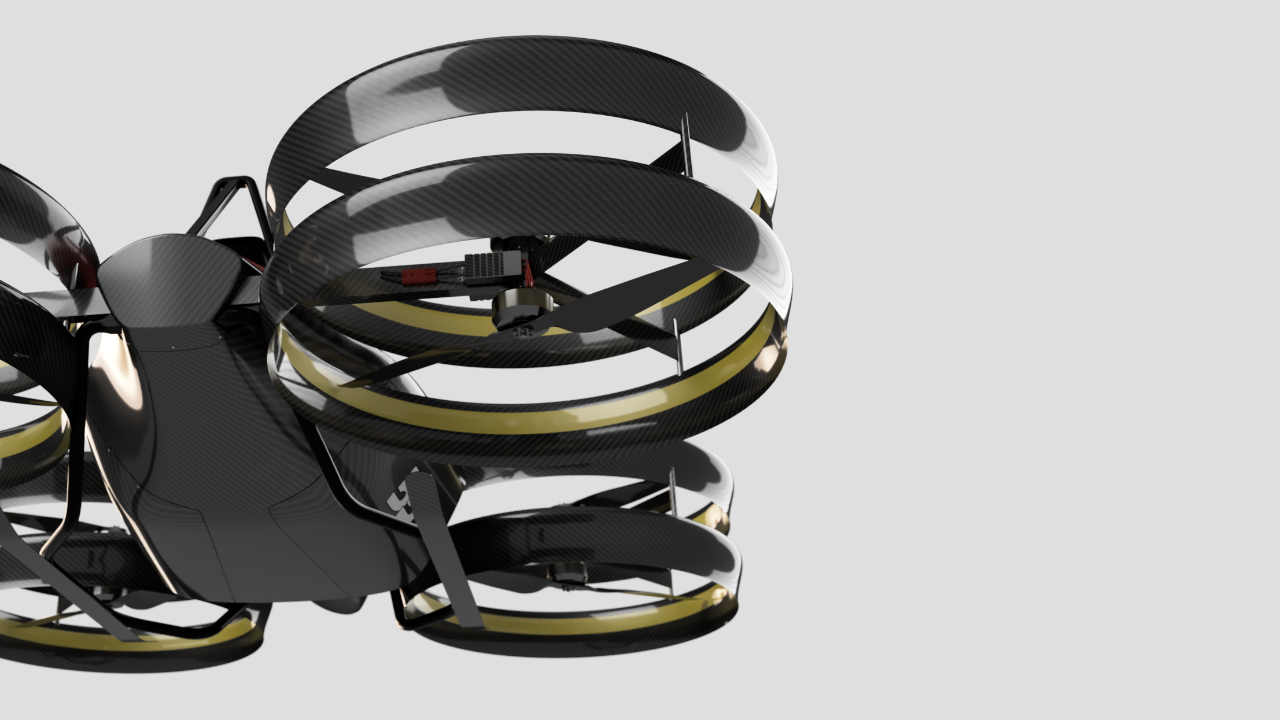
Image Credit: Elevate Racing.
And now for the question that's on everyone's mind: what's all this fun going to cost? A 15-minute flight will set you back about $250. Before you spit out your coffee, think about it. People pay more than that to drive a supercar around a track for three laps or to be thrown out of a perfectly good airplane. For the chance to engage in three-dimensional racing against your mates? I'd say that's a bargain. It's the ultimate "experience day" gift.
Of course, if you're the sort of person who has a very large back garden and a healthy bank balance, you can just buy one for $199,000, Elevate will sell you your very own AirKart, complete with the flight training you'll need to avoid trimming the hedges with it. It's a huge amount of money for a toy, but then, it is the "ultimate toy," as Michalczyk says. And he's right.

Image Credit: Elevate Racing.
The timeline for all this glorious foolishness? A flying prototype is expected by early next year. If all goes to plan, and let's be honest, it rarely does in this business, production will start in 2026, with the first AeroKarting tracks opening in the US, the Caribbean, Europe, and the Middle East in late 2027. Yes, there's a degree of optimistic scheduling here, but the core idea is so sound that I'm willing to give them the benefit of the doubt.
While the rest of the world is stuck in committee meetings arguing about flight corridors and noise abatement, Elevate Racing is building a playground. They've cracked the code. It turns out that the future of personal flight might not be about getting to work faster but about having the most fun you can possibly have with your feet off the ground. And I need to start saving up. I plan on being first in line.
