
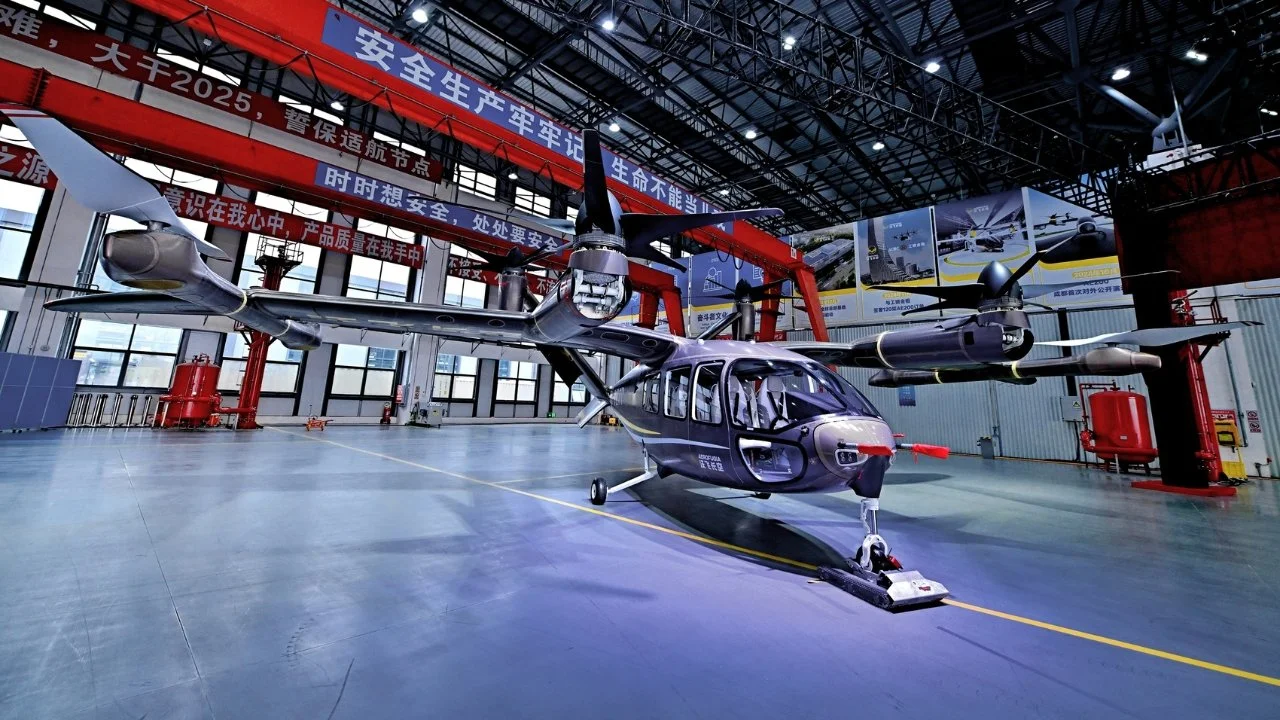
Image Credit: Aerofugia.
For how long have we been promised flying cars? Every sci-fi movie, every futurist with a turtleneck, every wide-eyed inventor has dangled this glorious carrot in front of us for many, many years. Well, it seems something is finally happening. A Chinese company owned by the same folks who bring us Volvo and Lotus has apparently decided to stop talking and start building. The first flying taxi is officially ready, and my inner child is doing cartwheels while my adult brain is asking a lot of skeptical questions.
The company in question is Aerofugia (I honestly thought it was the name of a condition you get after a long-haul flight). It's actually the aviation skunkworks of Geely, and they've just pushed their first proper, ready-for-human-testing AE200 eVTOL aircraft off the assembly line. Let me translate that from engineering jargon: the thing is built. It's not a drawing, a render, or a clay model. It's a real, physical machine, and they're about to start strapping people into it. This is a big deal.
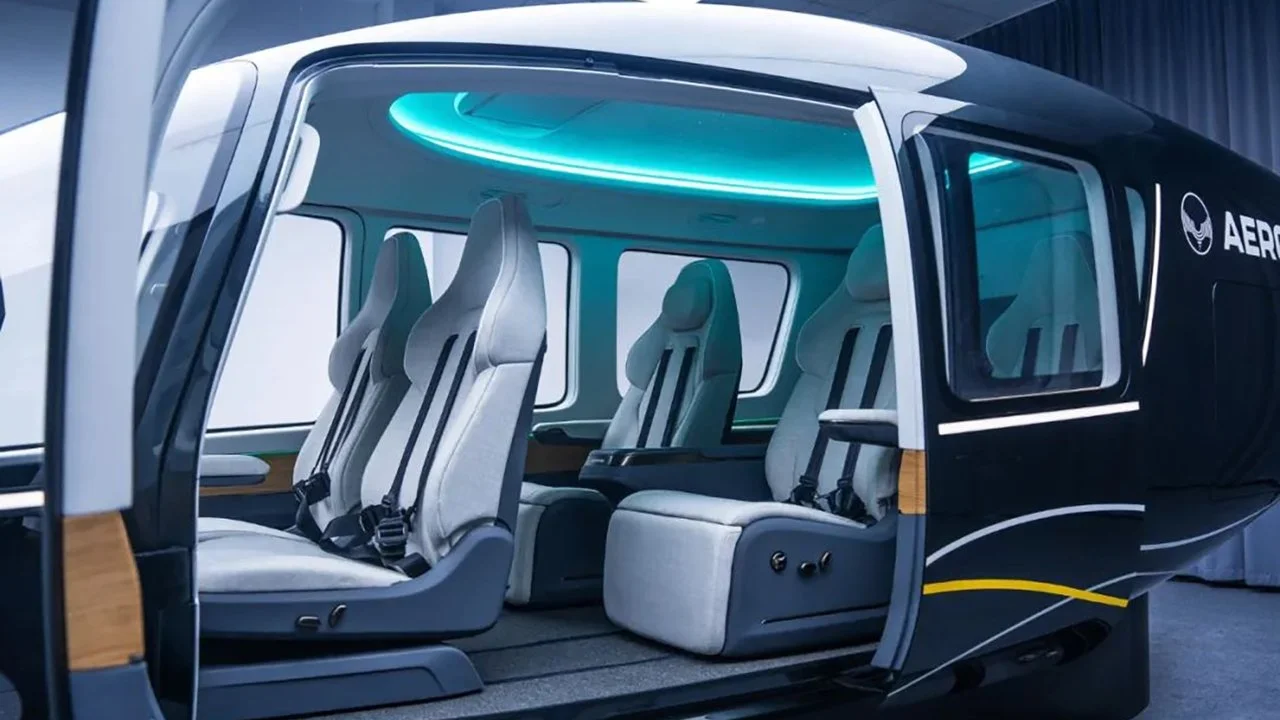
Image Credit: Aerofugia.
The AE200 is an eVTOL, which stands for electric Vertical Takeoff and Landing. It's designed to carry one pilot and four passengers, which sounds suspiciously like the perfect configuration for an airborne Uber Black. I'm already picturing the app: "Your Aerofugia is now arriving. Please proceed to the rooftop."
The AE200 has a wingspan of about 47.6 feet, making it wider than a city bus is long. It stands a proud 15.1 feet tall and is 29.5 feet from nose to tail. It's not a small gadget. This isn't a drone you can land in your backyard unless your backyard is an airport. But its size gives it presence and a bit of stability when it's flying you over rush-hour traffic.
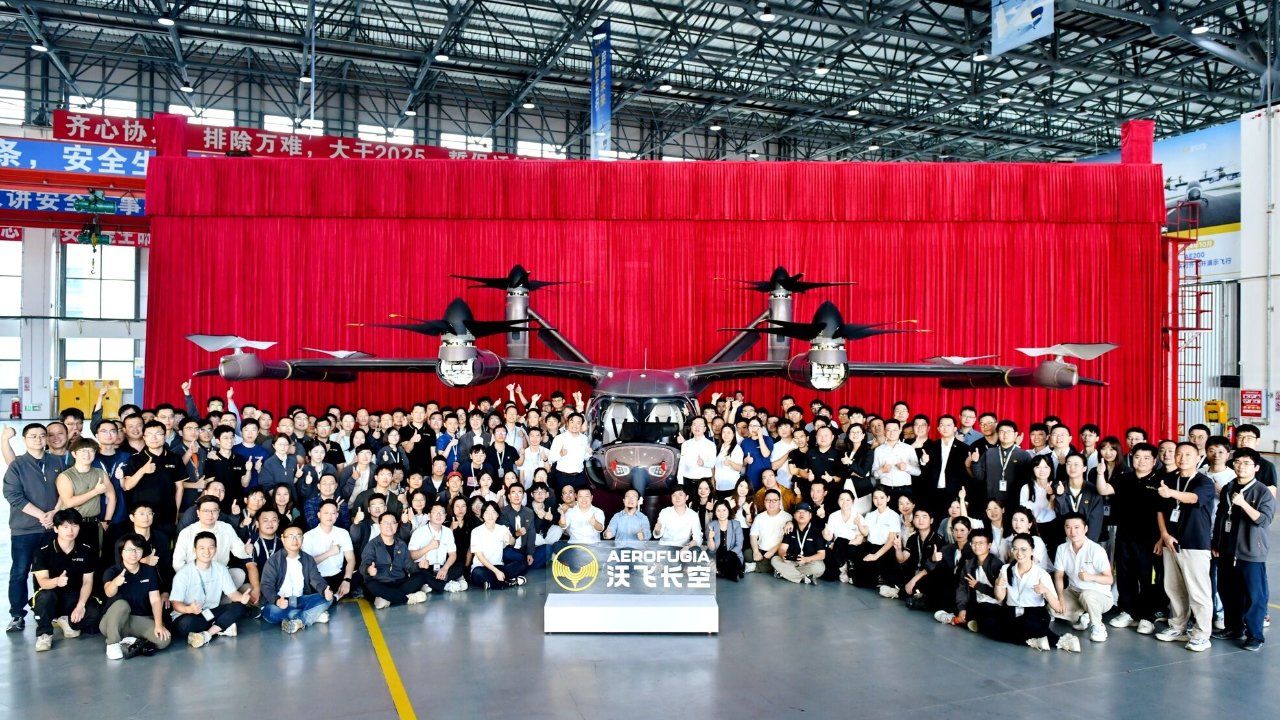
Image Credit: Aerofugia.
The real headline figure is its range: a claimed 124 miles on a single charge. Now, your inner skeptic - the one I listen to every day - might pipe up and say, "Only 124 miles?" It actually is enough since this bird isn't for flying from New York to Miami. It's designed for what they call "low-altitude mobility." That means skipping across a traffic-choked city, doing an airport run in 15 minutes instead of 90, or perhaps some rather fancy sightseeing without the eardrum-shattering racket of a traditional helicopter. For those jobs, 124 miles is more than enough.
And that brings us to the best part: the noise. Wait, what noise? Because it's electric, the AE200 should be significantly quieter than its gasoline-chugging cousins. The company also claims its operating costs will be much lower than a helicopter's, but that's not really a high bar to clear. Running a helicopter is famously one of the most efficient ways to turn vast sums of money into noise and vibration. The AE200 promises to do it with the quiet hum of progress and a much smaller bill at the end of the month.

Image Credit: Aerofugia.
Right, I know some of you will be excited, but don't rush to trade in your car just yet. Sure, the first machine has rolled off the line, but it now has to face the most terrifying beast known to aviation: the certification board. It will be prodded, poked, and tested in thousands of ways to make sure it's safe enough not to turn its occupants into a news headline. Aerofugia is aiming to have its big new factory in Chengdu up and running in 2026, so we're still probably a couple of years away from seeing these things buzzing around our cities.
Still, the intent is there. Aerofugia says they've already stocked over 1,000 commercial orders. Companies are lining up to operate these things as air taxis and shuttles in major economic hubs across China. The future is being ordered in bulk, at least in China.
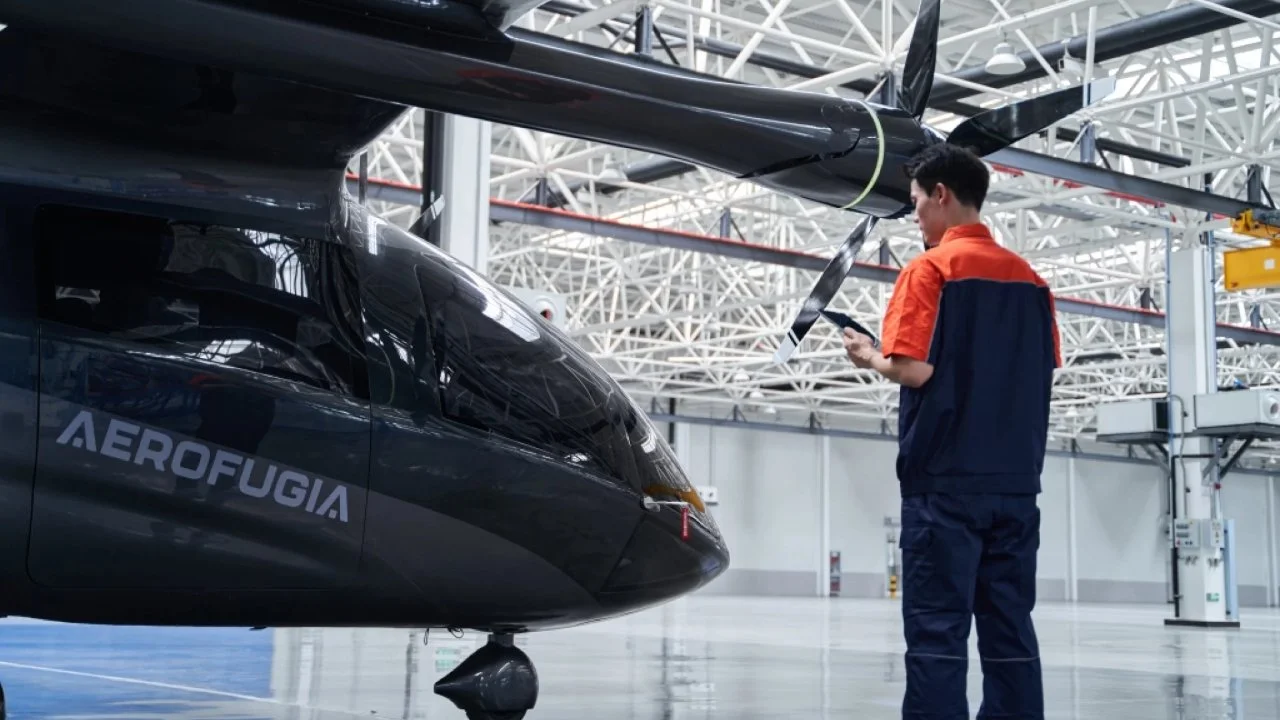
Image Credit: Aerofugia.
Of course, the source material conveniently forgets to mention a few key details. How fast does it go? No idea, but I'm hoping for at least "brisk." And the most important question of all: how much does it cost? The press release is mysteriously silent on this point, so I can only assume the price is listed as "If you have to ask, you can't afford it." I imagine it will be priced competitively against a private island or a controlling stake in a tech company.
But let's not get bogged down in the practicalities. For a moment, let's just marvel at the fact that it exists. A Chinese car company has built a five-seat electric aircraft that can take off like a helicopter and fly like a plane. This is the kind of engineering that pushes the world forward. Am I a little skeptical? Of course. There are immense hurdles to overcome, from battery technology to air traffic control for a sky full of these things.
But I am also incredibly excited. I always filed the idea of a "flying car" under "Yeah, right, and I'll have a jetpack for my commute, please." It was the stuff of cartoons and fuzzy, optimistic 1950s newsreels. Someone in China apparently watched those same cartoons and decided to take them seriously. And now, I might have to eat my words. With a side of crow. Flown in by an electric taxi.
