Image Credit: Helix.
I have always maintained that the fundamental problem with boats is not the water. Water is lovely. It's great for ice cubes and keeps the fish moist. No, the problem with boats is that steering them is akin to trying to push a shopping cart with a wobbly wheel through a muddy field while blindfolded. You turn the wheel, wait three to five business days, and hope the front end eventually agrees with your suggestion.
For the last century, we've relied on a very archaic system: a big, thumping engine in the middle of the boat, a long metal stick poking out the back, a propeller that churns water into froth, and a rudder that acts like a barn door dragging in the current. It is inefficient, it vibrates like a washing machine containing a brick, and it takes up an obscene amount of room where one could reasonably install a minibar or a humidor.
But the British are up to something again. Usually, when I tell you a British company is engineering a new electrical system, you should instinctively reach for a fire extinguisher. But this is Helix. They build electric motors that are so power-dense they make standard engines look like lazy lumps of cast iron. They have been dabbling in hypercars, and now, they have turned their gaze to the sea.

Image Credit: Helix.
They have created something called a "Pod Cartridge." And no, you don't need to blow into it like an old Nintendo game to make it work. Here is the gist of it. Instead of that massive engine taking up the prime real estate in the hull, Helix wants to put the motor outside. Underwater. In a little pod attached to the bottom of the boat.
Now, before the maritime historians among you write angry comments using words like "starboard" and "ahoy," I know. The "pod drive" has been around since the 1990s. The Swiss-Swedish giants at ABB made the Azipod, which is brilliant. It pulls cruise ships and icebreakers around with ease. And yes, Volvo has its own version that is actually quite efficient, and it has changed the way we power pleasure boats.
But there is a catch. ABB units are the size of a small house. To get the power needed to move a proper ship, the electric motor had to be massive. When you stick a massive motor underwater, it creates drag. Try swimming while wearing a parka and you'll get the idea.

Image Credit: ABB.
Helix has looked at the size problem and applied some electric sorcery. Because their motors are evolved from the hypercar world, they are tiny. We are talking about the SPC177 radial flux motor. It weighs just 68 pounds (that's about the same as a very well-fed Golden Retriever), yet it pumps out a continuous 400 horsepower (300 kW).
That is a power-to-weight ratio that borders on the ridiculous. It's 9.7 kW per kilogram. If you put that kind of power density in a blender, you could probably liquefy a brick. And because the motor is so small, the underwater pod can be small. Helix claims this reduces drag by 70 percent compared to traditional, bulky pod drives. In the world of hydrodynamics, that is not a marginal gain; that is cheating physics.
So, what does this mean for you and me, the aspiring captains of a weekend cruiser? First, let's talk about parking. As I mentioned, docking a boat usually involves a lot of shouting, a minor collision with a pier, and the loss of your security deposit. These Helix pods can rotate 360 degrees. They don't need a rudder. The pod is the steering.
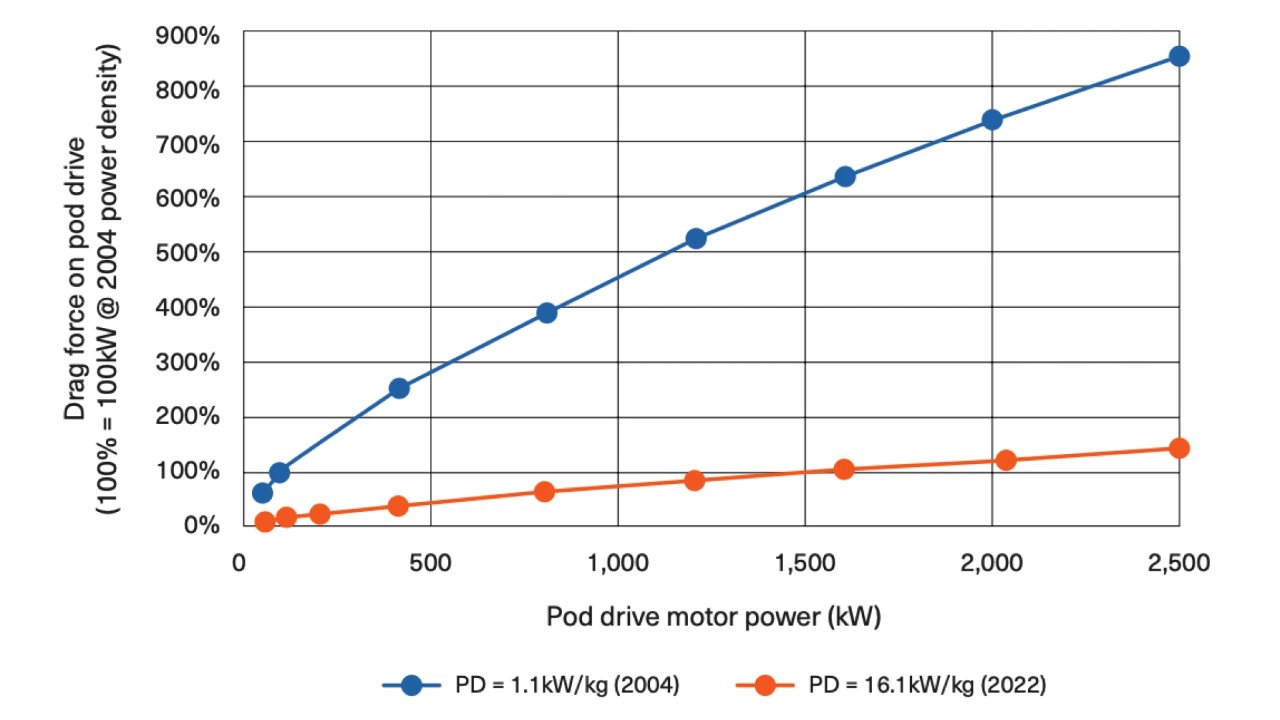
Image Credit: Helix.
This means you can direct thrust anywhere. You can turn the boat in its own length. You can crab-walk sideways into a slip. It gives a boat the same torque-vectoring agility as a high-performance electric sports car, but without the tire smoke.
Then there is the space. Because you don't need a greasy diesel engine sitting in the middle of the boat, and you don't need driveshafts running through the floorboards, you suddenly have a hollow hull. That volume is now free. You could put in a bigger master bedroom. You could install a bowling alley. You could, if you were sensible, put in a larger battery bank.
Helix is offering these "cartridges" in three flavors to start: roughly 134 horsepower (100 kW), 268 horsepower (200 kW), and the big 402 horsepower (300 kW) unit. They even plan to go up to 3 megawatts in the future, which is enough power to possibly alter the rotation of the Earth.

Image Credit: Helix.
They are calling it a "plug-and-play" solution. The idea is that boat builders can buy these cartridges - which include the motor, the gearing, and the electronics - and just slot them into their own hull designs. It's the IKEA approach to marine propulsion, hopefully without the leftover screws.
But as usual, I must sprinkle a little bit of my trademark skepticism here. While the motor is efficient, and the drag is low, you still need to feed it electrons. Boats are heavy, and water is thick. Moving through it consumes energy at a rate that makes a Hummer look like a Prius.
Helix is aware of this. They know that if you rely solely on batteries, your range might be limited to "just out of sight of the marina" before you need a tow. That is why they are pitching this as a flexible system. You can run it on batteries, yes. But you can also run it as a hybrid, using a diesel generator to create the electricity.
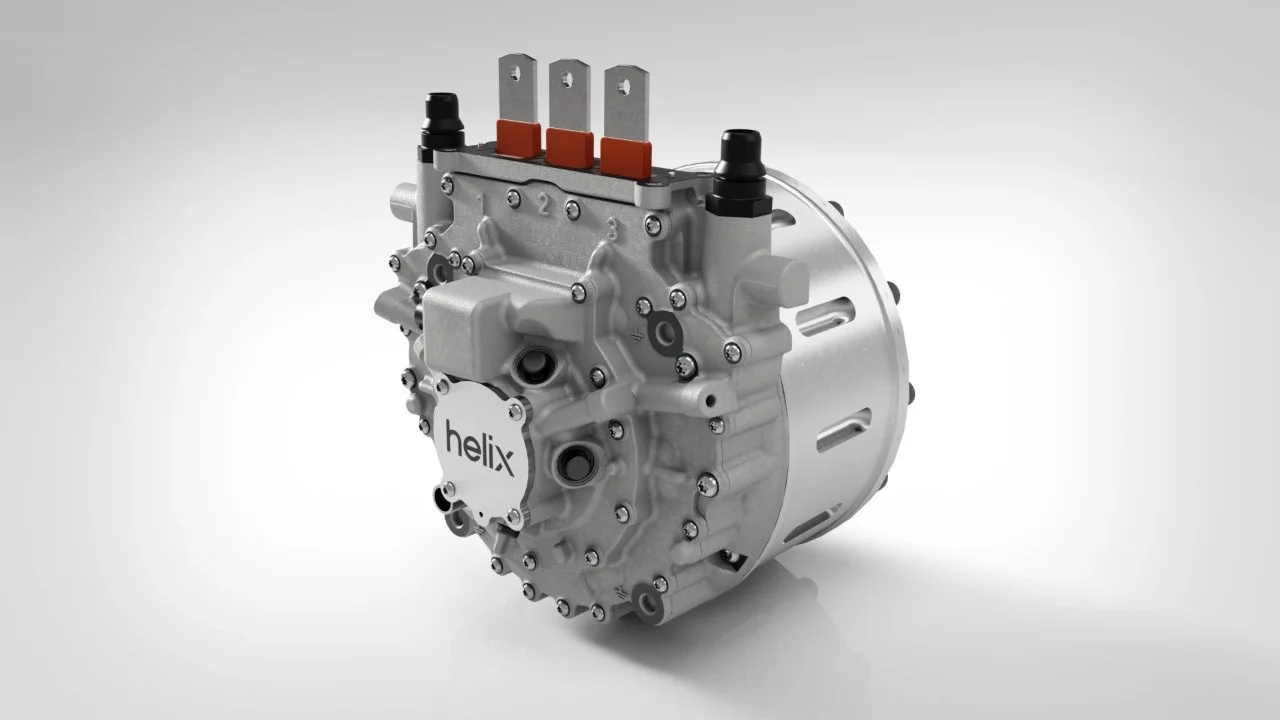
Image Credit: Helix.
It sounds counterintuitive - burning gas to make electricity to turn a propeller - but because the generator can run at its most efficient constant speed, and the pod eliminates the drag of rudders and shafts, you still save fuel. How much? Well, on big ships using the older, fatter pods, they saw savings of up to 25 percent. One study showed ferries saving $1.7 million a year. On a smaller boat with these sleek Helix pods, the efficiency gains could be profound.
There is no official word on the price of the unit itself yet, but we have a British invention that saves space, makes docking foolproof, goes like a stung cat, and helps save the planet. It almost sounds too good to be true. Usually, when something this promising comes along, it turns out to be made of cheese or it explodes when it gets wet.
But Helix seems to have cracked the code. By shrinking the motor, they've unlocked the pod drive for the rest of us. It's a clever bit of kit. And if it means I never have to embarrass myself trying to parallel park a 40-foot yacht again, I'll take two.
Enjoyed the article? Give us a 'LIKE' and FOLLOW us on MSN! We're tracking the electric future... even if it's still buffering.
