
Image Credit: Nissan.
The idea of a solar-powered car is the automotive unicorn. It's that beautiful, perfect concept that everyone wants to exist, but mostly it's just been a lot of "optimistic engineering." We've seen prototypes that look like fragile, plastic-wrapped high school science projects, and of course, there's the Aptera, which looks like it flew in from another (very stylish) solar system, but is technically a "motorized tricycle." Not a "car" car.
But now Nissan, a company that makes actual, you-can-buy-them-today cars, is taking a serious swing at it. And by "serious," I mean they've taken their most popular electric car in Japan and given it a very noticeable... hat.

Image Credit: Nissan.
The car in question is the Nissan Sakura. If you're in America, you've probably never seen one. It's a "Kei car," which is Japanese for "adorable" and "fits in parking spaces you didn't even know were parking spaces." This little EV has been Japan's best-selling electric vehicle for the last three years, and for good reason. It's a sensible city machine. The standard version already gets up to 112 miles of range, which is more than enough for most people's daily hops.
But Nissan's engineers, apparently fueled by an internal idea contest and maybe a little too much sunshine, decided to bolt something new on top. It's called the "Ao-Solar Extender." This add-on is a full-on, roof-mounted solar charging system. While you're driving, a fixed panel on the roof is quietly sipping electrons from the sky.
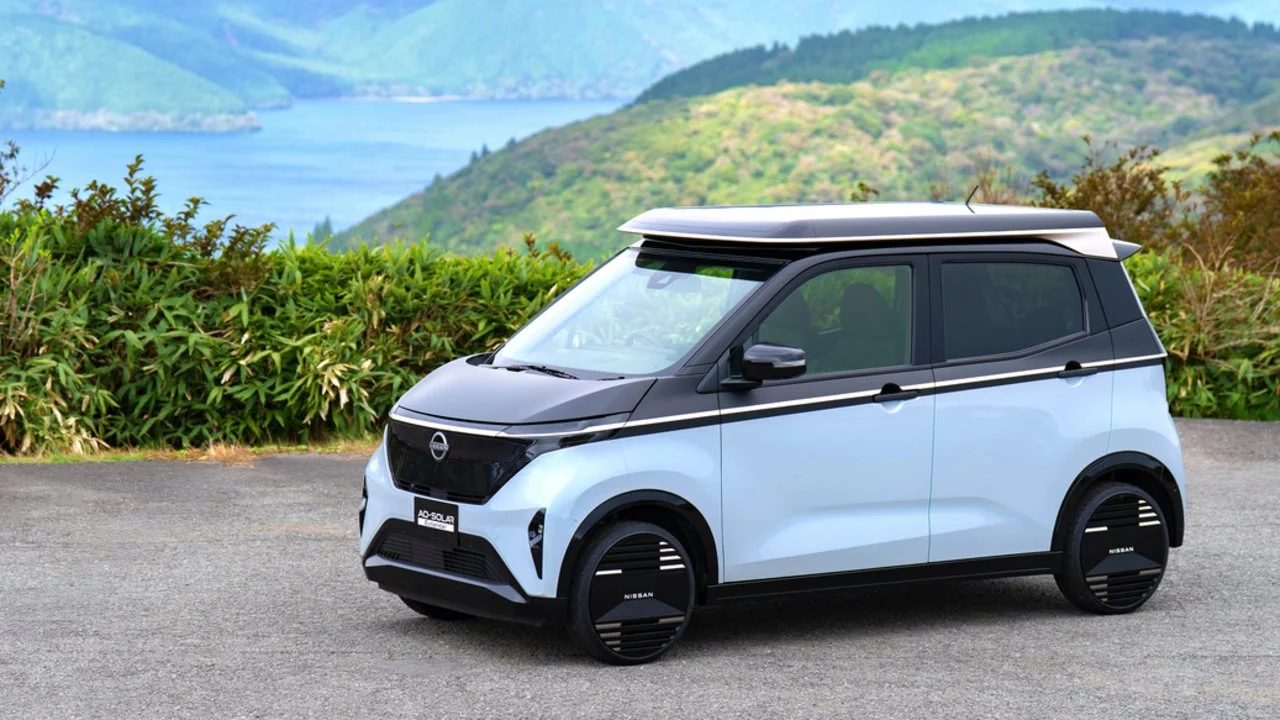
Image Credit: Nissan.
But when you stop, an additional panel extends outward, sliding forward to hover over your windshield. The car basically sprouts a giant, flat-brimmed hat. Nissan says it's "aerodynamically integrated" to minimize drag, but as you can see in the official images, it's not subtle. It's the kind of feature that makes small children stop and point.
There is, however, some serious method to this madness. When that panel is fully extended, the whole system generates about 500 Watts of power. Nissan's team, who I assume did this math in a very sunny room, calculates that this setup can generate enough solar electricity for about 1,864 miles of driving per year.
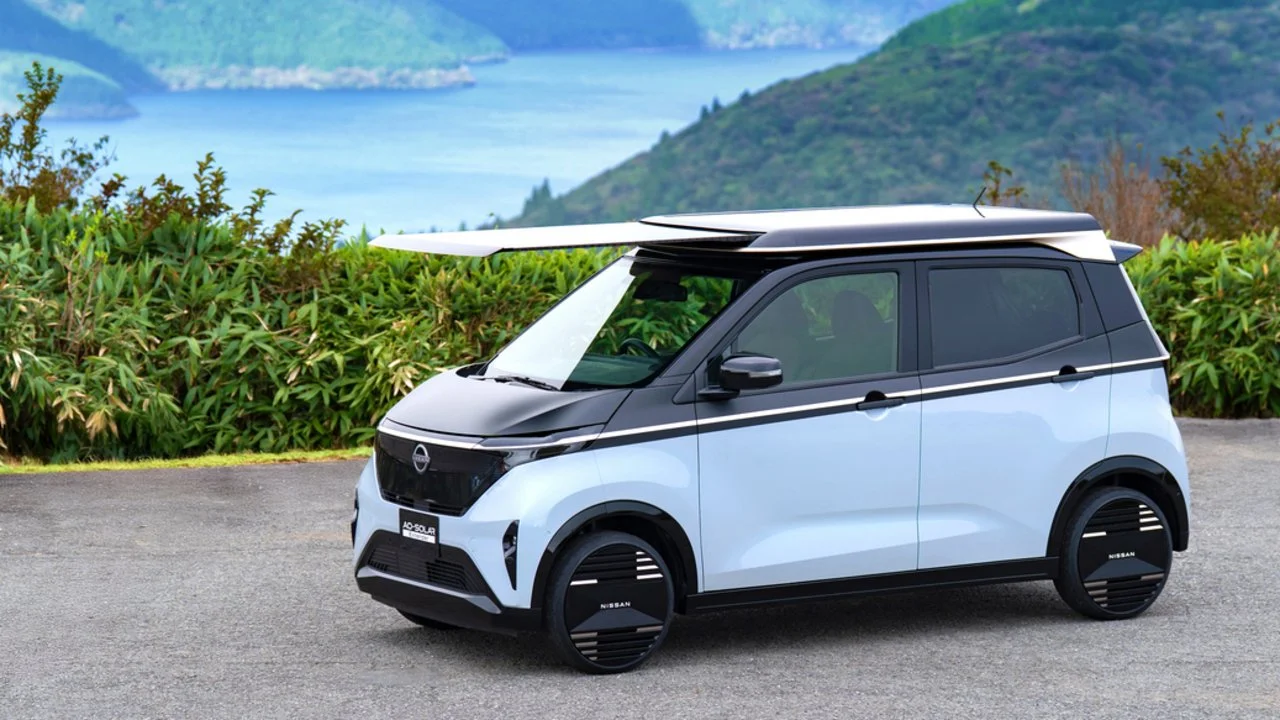
Image Credit: Nissan.
But before we all get too excited, let's break that down. 1,864 miles a year is roughly 5.1 miles per day. Okay, so you're not road-tripping across the country on sunbeams alone. But Nissan actually studied how Sakura owners drive, and it has numbers to prove its point.
It turns out, owners of this dinky EV aren't commuting 80 miles one-way. They're driving short distances. They're running errands. They're doing school runs. They're doing the exact kind of driving where an extra, free 5 miles a day could mean the difference between plugging in every night and almost never plugging in at all. For a huge slice of its owners, this solar hat could nearly eliminate the need for grid-based charging. Imagine that.
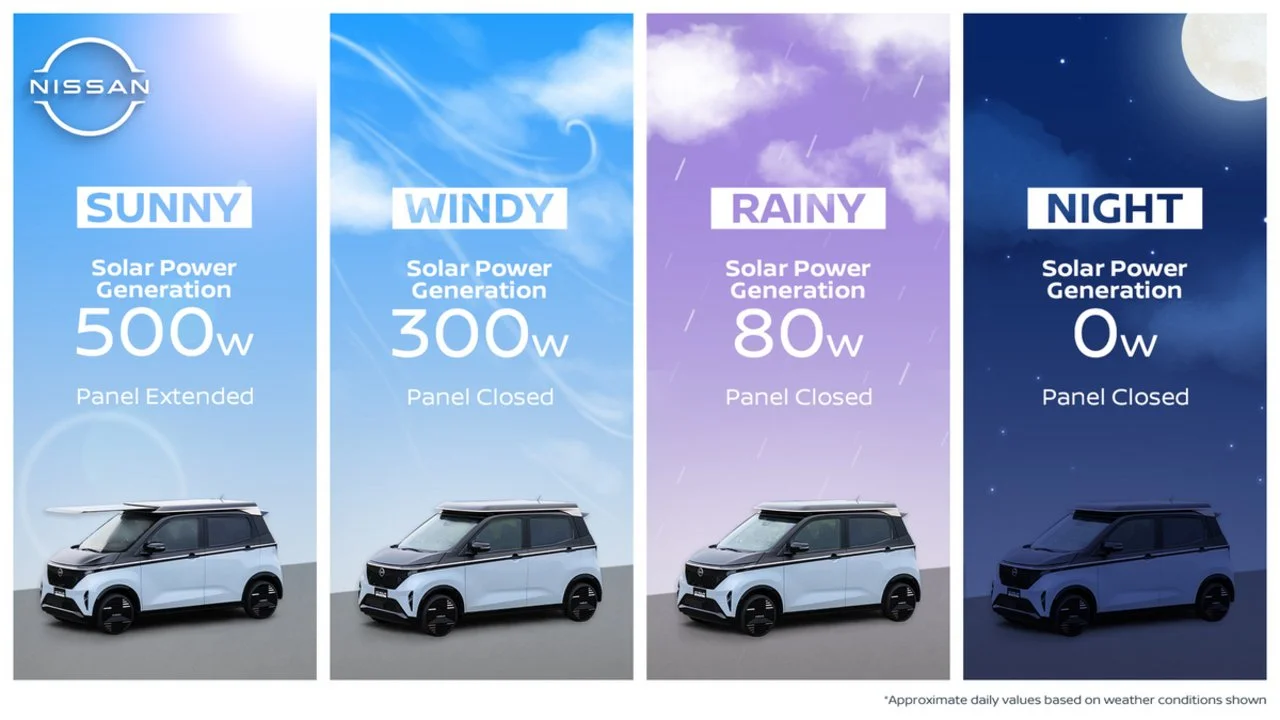
Image Credit: Nissan.
And there's a bonus prize! That giant panel shading your windshield? It's a giant sunshade. Shocking, I know. It helps block the sun, reduces cabin temperature, and helps your air conditioner work less. And when your A/C works less, you get more range! It's the beautiful, nerdy circle of life.
Look, the solar hat is a flashy accessory, but what's under the hat is just as important. The Sakura is a "minivehicle," which is a polite way of saying it's teeny-tiny. Its greatest party trick is a turning radius of just under 16 feet. My long-term-loaner F-150 probably needs that much space just to think about turning. This little thing could do a U-turn in a wide hallway.
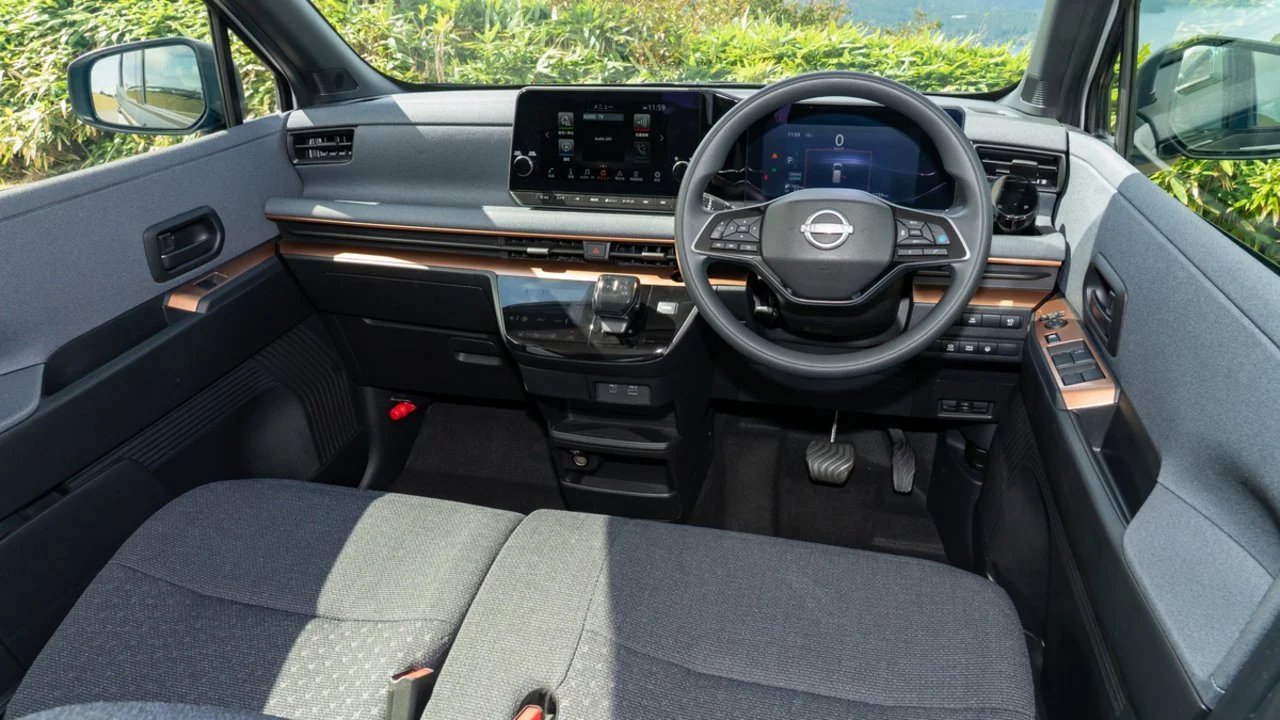
Image Credit: Nissan.
Sakura is powered by a motor that produces 63 horsepower… A-ha! But before you laugh, it also delivers 144 pound-feet of torque. That's the EV secret sauce! It means that from a dead stop, it'll feel quick, perfect for darting through traffic. Just... maybe not quick enough to challenge anyone at a drag strip. It also has "Sport" mode, which in a 63-horsepower car sounds absolutely adorable.
Now for the juice. The Sakura is fitted with a 20 kWh battery, which is compact enough to give you a surprisingly roomy interior. Nissan claims it'll get you up to 112 miles on a charge. That's more than enough for a week's worth of school runs and grocery trips. It also has Nissan's e-Pedal, which is fantastic. You basically drive with just the accelerator — lift your foot, and the car slows down smoothly and recharges the battery. It's brilliant in city traffic.

Image Credit: Nissan.
And probably the best bit is that the battery can be used as a mobile power source. Nissan says it can power a home for a full day during an emergency. So, it's not just a car; it's the world's cutest, quietest generator. As for price, the cheapest Sakura is the X version which starts at just over $17,000, the pricier G model has a $20,000 sticker price.
When can you buy this sun-worshipping city car? Not quite yet. It's a working prototype set to debut at the 2025 Japan Mobility Show. Nissan says it's "planned for future commercial launch," but the timing will be "announced at a later date." That's the classic, non-committal industry shrug for "Please get excited, but don't hold your breath."
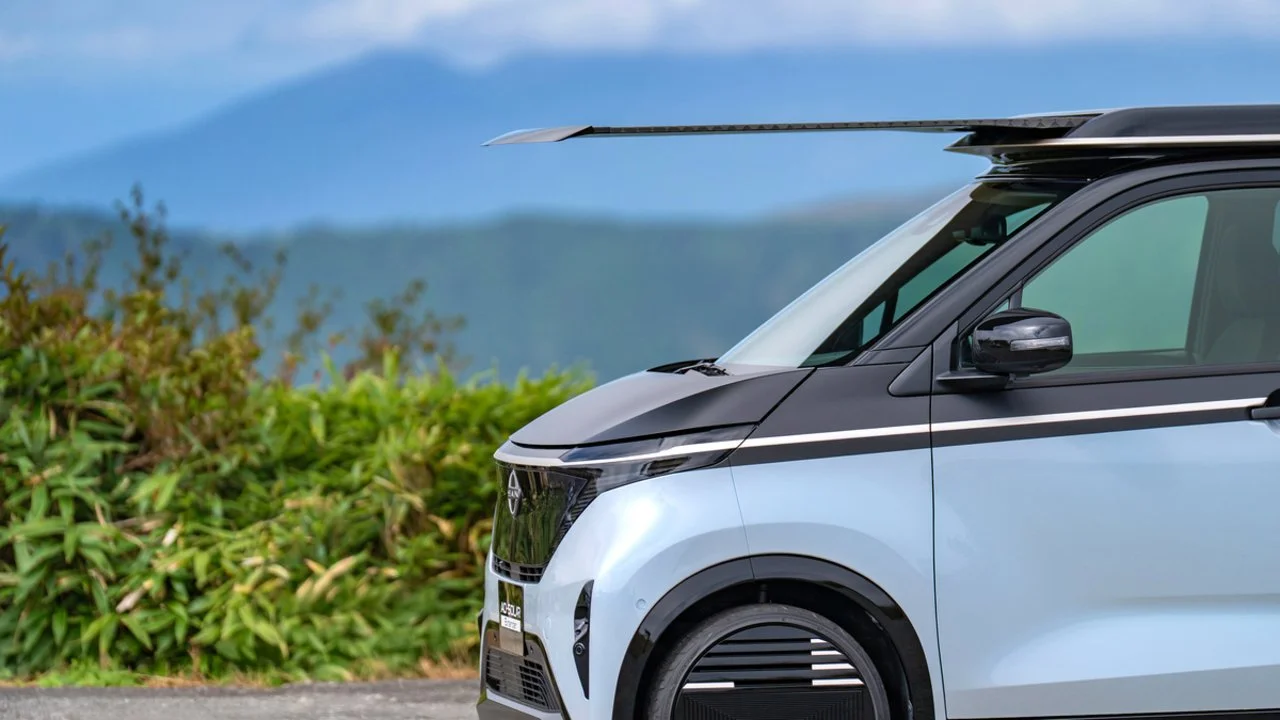
Image Credit: Nissan.
Honestly? I'm charmed. I really am. Is it a bit goofy-looking? Oh, absolutely. Is it going to solve all our energy problems? Never. But it's a clever and different solution for the exact people who buy this car. A house backup battery that charges from the sun and can take the kids to school? Why would anyone not want that?
Enjoyed the article? Give us a 'LIKE' and FOLLOW us on MSN! We're tracking the electric future... even if it's still buffering.
