

Image Credit: EHang.
The flying car has been the default symbol of "The Future," right alongside robot butlers and food in pill form. Well, I've got good news and… some other news. The brilliant folks at EHang in China have just unveiled their new creation, the VT35. And it absolutely, definitely, 100-percent flies.
The other news? It's not a car. You can't drive it. In fact, nobody can drive it. They seem to have, in a moment of inspired genius or terrifying oversight, completely forgotten to install a steering wheel.

Image Credit: EHang.
This, my friends, is an eVTOL. That's "electric Vertical Takeoff and Landing" for those of you who don't speak in acronyms. In layman's terms, it's a massive, two-person drone. EHang has launched this new "long-range" model to, and I quote, create "one-hour air mobility living circles." I'm not entirely sure what that is, but it sounds like something you'd join in a sci-fi movie just before things go horribly wrong.
So, how does this electric marvel work? It's what they call a "lift-and-cruise" design. It has a "tandem-wing" layout, meaning it has wings at the front and the back. Bolted to those wings are eight propellers. These all point straight up, like a helicopter's, and are used to lift the VT35 off the ground vertically. No runway needed. Just find a patch of grass, a rooftop, or a sufficiently sturdy parking lot.
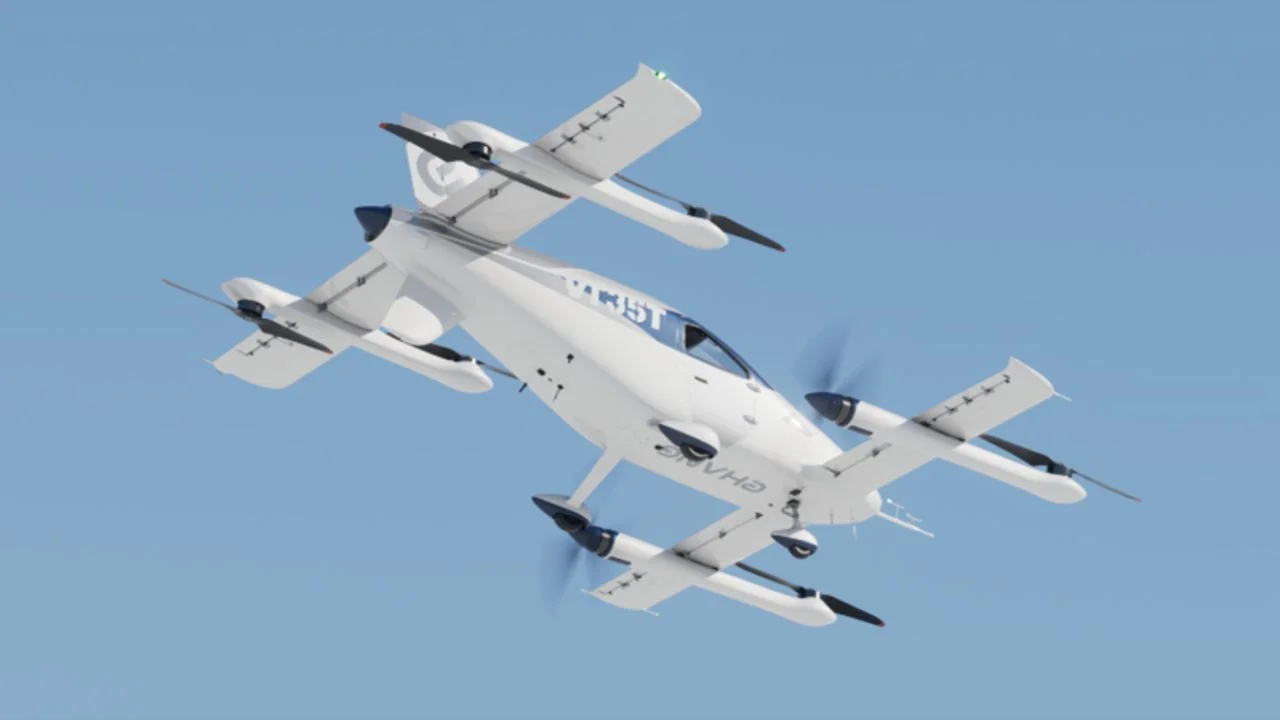
Image Credit: EHang.
Once it's airborne, the magic (or the complicated bit) happens. Those eight propellers shut down, and a ninth propeller, mounted at the very back, kicks in. This one acts as a "pusher," shoving the aircraft forward so it can fly like a normal, boring plane, using its wings for lift. EHang proudly announced they have "successfully completed" their transition flight test. This is... comforting. You really want them to nail that "switching from helicopter to plane in mid-air" part.
The VT35 is not a little toy. It's about 26 feet long and has a 26-foot wingspan. It stands nearly 10 feet tall. Despite its size, it's a lightweight, with a maximum takeoff weight of just under 2,100 pounds, if we believe the press release. That's less than a new Mazda Miata. For a two-seat aircraft, that's astonishingly light. Let's hope the two occupants aren't built like me.

Image Credit: EHang.
Being electric, the big question is range. EHang claims "approximately 200 kilometers." For those of us in the land of the free, that translates to about 124 miles. EHang calls this "long-range," which tells you a lot about the battery life of its other, smaller models. Still, 124 miles isn't bad. That's New York to Philadelphia without touching the ground. Or, more likely, from one side of a giant Chinese "megalopolis" to the other, hopping over mountains or seas.
EHang revealed this thing at a very grand event in Luogang Park in Hefei. And everyone was there. The Vice Mayor, the Deputy Director of the "Low-Altitude Economy Division" — which is apparently a real job — and various other Important People in Suits. When a company unveils a new product and the audience looks like a government cabinet meeting, you know it's a serious bit of kit.

Image Credit: EHang.
And then, they announced the price. Are you sitting down? The standard version of the VT35 in China is priced at 6.5 million RMB. I got out my trusty calculator, did the math, and... that comes out to just over $910,000. For a two-seat electric pod. You could buy a half-decent helicopter for that. You could buy a real airplane. You could buy a Lamborghini and a very nice boat. But neither of those has nine propellers or flies itself.
Ah yes, the "flying itself" part. This is the main event. There is no pilot. It's completely autonomous. It's managed by a "command-and-control system" and has "full-redundancy design" and "obstacle detection." This is all wonderful, in the same way that "autopilot" is wonderful on a long, straight highway. It's slightly different when you're 3,000 feet up and the software is deciding whether that flock of geese is a "soft" obstacle or a "hard" one.

Image Credit: EHang.
Now, before you rush off to place your $910,000 order, hold on. You can't actually buy one yet. Not really. China's version of the FAA, the CAAC, "accepted" EHang's application for a type certificate back in March. It is currently "undergoing airworthiness certification." EHang says it's "streamlining" this process, using what it learned from certifying its smaller EH216-S. I've been around aviation long enough to know that "streamlining" and "government certification" are words that go together about as well as "all-you-can-eat" and "sushi."
The grand plan is, of course, an "ecosystem." That's the big buzzword. The little EH216-S will handle the short hops within the city, and this new VT35 will handle the "long-range" 124-mile jaunts between cities. The Hefei Municipal Government — the same folks who showed up for the free snacks at the launch party — has already placed purchase orders. Shocking, I know.
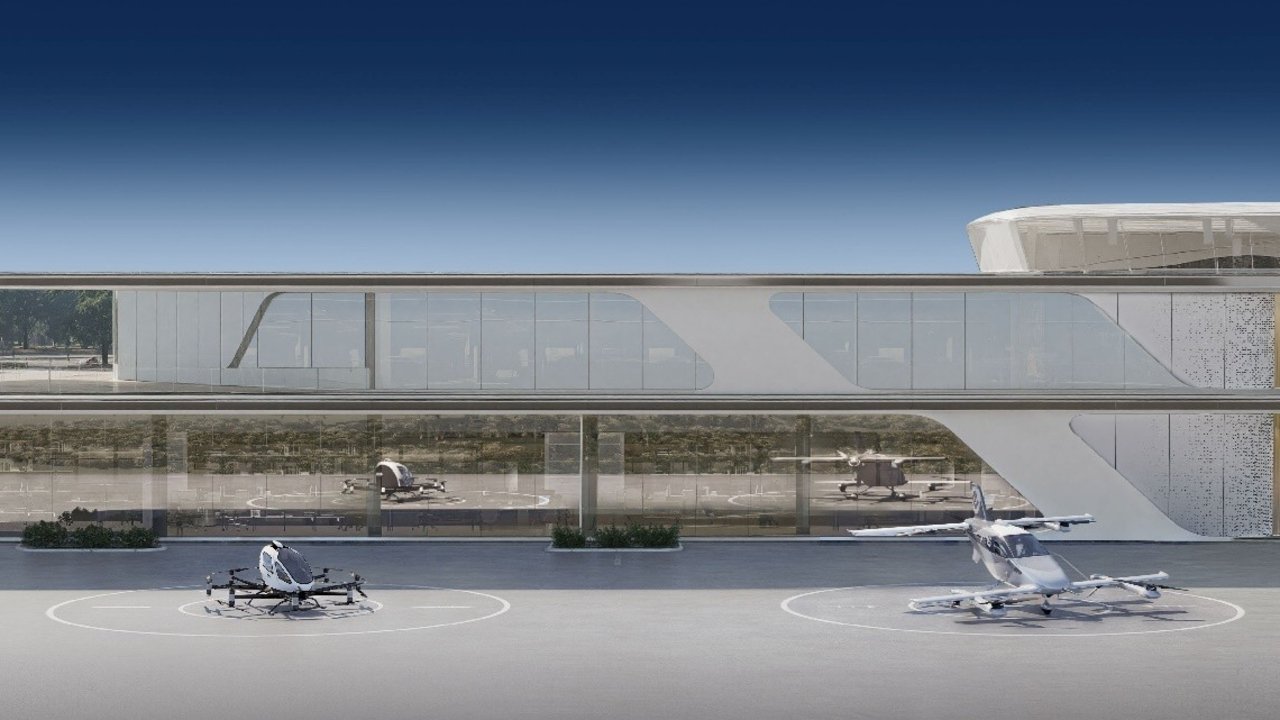
Image Credit: EHang.
I gotta say, I love this stuff. The ridiculous ambition of it all. Is it really a practical, affordable solution for mass transit? You kiddin'... Not at nearly a million bucks a pop. But is it a glimps of a future where we are all just "payload" in an autonomous flying pod? Unfortunately, yes. Am I skeptical about the certification timeline and the software? You bet. But am I also childishly excited and desperate to have a go? Oh, yes. Just... maybe let the vice mayor go first.
Enjoyed the article? Give us a 'LIKE' and FOLLOW us on MSN! We're tracking the electric future... even if it's still buffering.
