Image Credit: Captain Electro.
It is a universally acknowledged truth that if you want to sell a sports car, you should probably sell it in the United States. We have the highways, the obsession with speed, and, apparently, all the money. Yet, for the last five decades, Caterham - the British purveyors of four-wheeled insanity - looked at the American market and decided they would rather not bother. They were quite content selling the Seven, a car that is essentially a bathtub bolted to a chassis, to Europeans who enjoy catching flies with their teeth.
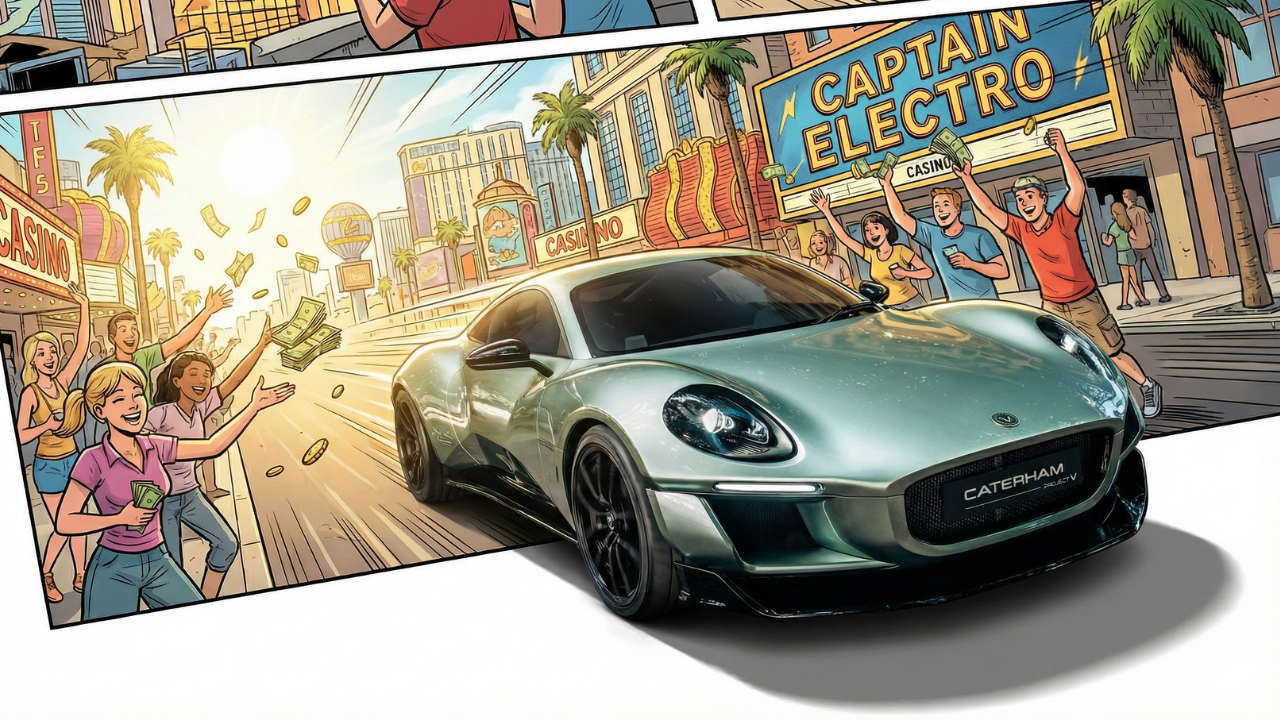
But something has shifted in the cosmos. The folks at Caterham have finally looked at a map, pointed their fingers at the land of the free, and realized they have been missing out on a gold mine. Justin Gardiner, the man responsible for Caterham's overseas adventures, stood up at the Consumer Electronics Show in Las Vegas - a city built entirely on bad decisions and disposable income - and admitted the error of his ways. He told Car and Driver quite bluntly, "We have ignored America as a market for 50 years, and that's ridiculous, because you guys are all loaded."

Image Credit: Caterham.
I appreciate the honesty. There is no marketing fluff about "synergy" or "shared values." Just a simple admission: You have cash, and we would like to relieve you of it. Specifically, about $135,000 of it. The vehicle they intend to trade for your hard-earned dollars is the Project V. It is fully electric, and unlike the iconic Seven, it actually looks like a car. It has a roof. It has doors. It presumably keeps the rain out, which is a revolutionary concept for this particular manufacturer.
Caterham has been teasing this electric coupe for more than two years, which in the automotive world is roughly the same amount of time it takes to form a mountain range. But the wait is nearly over. A working prototype is debuting at the Tokyo Auto Salon, and Caterham is promising that this time, they are taking the US market seriously.

Image Credit: Caterham.
When most manufacturers decide to build an electric vehicle, they follow a very boring recipe. They take a massive, flat battery, stick it underneath the floor like a giant skateboard, and then bolt some seats on top. It is sensible. It is efficient. And Caterham hates it.
Caterham argues that the skateboard layout forces the driver to sit too high. If you have ever driven a Seven, you know that the driving position is less "sitting in a chair" and more "sitting on the asphalt." To preserve that sensation of scraping your backside along the road, they have completely ditched the skateboard idea.
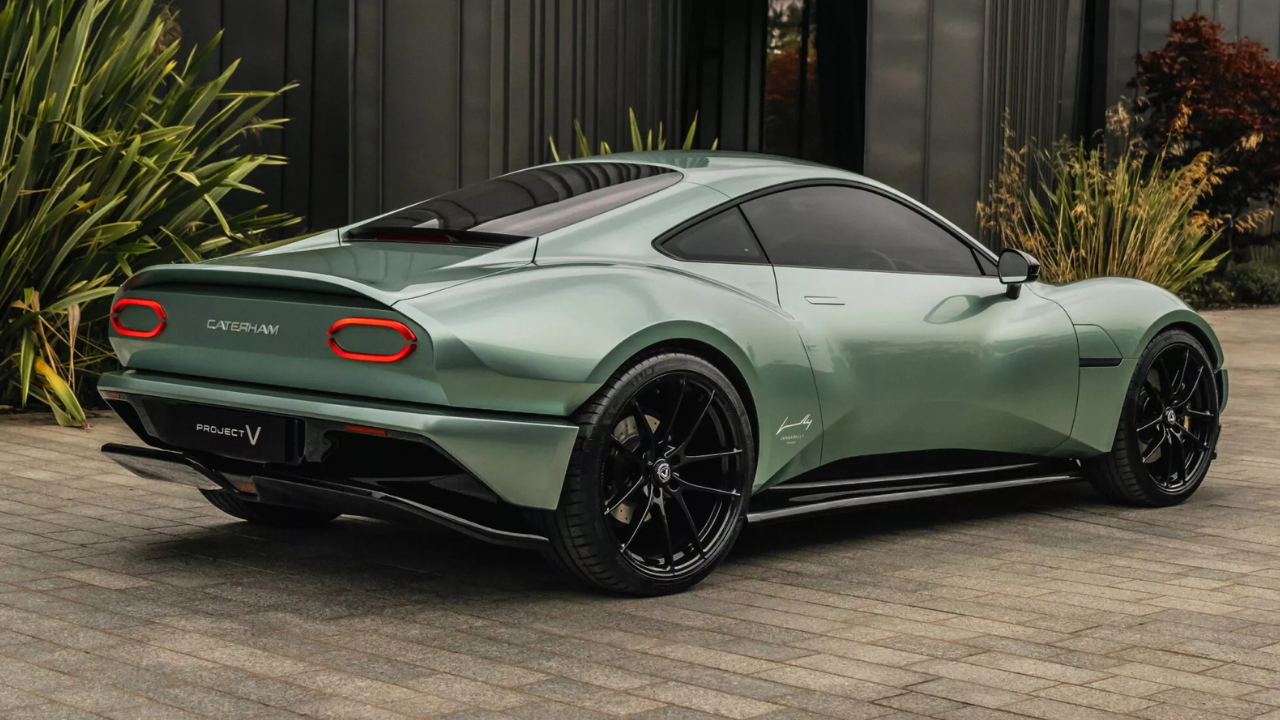
Image Credit: Caterham.
Instead, they have opted for a layout that sounds like it was designed during a pub lunch. They have taken two battery packs - sourced from Xing Mobility - and shoved one at the very front of the car and the other at the very back. Gardiner calls this setup "polar momentum." It sounds like something from a physics textbook that I would have failed in high school, but the logic is actually quite sound. By pushing the weight to the extreme ends of the car, they are trying to mimic the handling characteristics of the Seven.
Most EV makers want the weight in the middle. Caterham wants it at the nose and the tail. This is supposed to make the car feel lively, nimble, and perhaps a little bit frightening, which is exactly what you want from a British sports car. If you aren't slightly worried it might kill you, is it really a sports car?

Image Credit: Caterham.
These twin battery packs provide a combined capacity of just over 27 kWh each. They are liquid-cooled using a dielectric fluid, which sounds terrifyingly scientific but is essential for managing heat when you are driving like a lunatic. Powering this electric rebel is a motor sourced from Yamaha. Yes, the same company that makes concert grand pianos and motorbikes that scream like banshees. It produces 268 horsepower.
I can see the internet going furiously already. "Only 268 horsepower? My washing machine has more torque!" But you have to remember the context. This is a Caterham. It is not a 5,000-pound luxury barge; it is a lightweight instrument of speed. In a car this light, 268 horses is plenty to ruin your hairstyle.

Image Credit: Caterham.
Here is where things get really interesting, and by interesting, I mean "bold." In an era where companies are fighting to see who can charge a battery the fastest, Caterham has capped the Project V's charging speed at 100 kW. That is not exactly lightning fast. But Gardiner has a defense for this, too. He says they aren't concerned with rapid top-ups for long highway commutes. Their focus is entirely on how quickly the battery can discharge.
The logic is that the typical Caterham buyer isn't trying to drive from New York to Los Angeles on a single charge. They are trying to thrash the car on a back road or a race track until the tires melt. The cooling system and the battery tech are optimized to let you drive hard without the car overheating and going into "limp mode," even if it means you have to wait a little longer at the plug afterwards.

Image Credit: Caterham.
Let us recap, then. Caterham has finally noticed that Americans have money. To get that money, they are offering us a $135,000 electric sports car that refuses to follow the rules of modern EV design. It rejects the skateboard chassis, splits its batteries like a dumbbell, and prioritizes driving feel over charging speed.
It is a massive gamble. Asking American buyers to part with six figures for a car with 268 horsepower is a brave strategy. But if the Project V drives anything like a Seven - if it possesses that same frantic, joyous, wired-to-your-nervous-system energy - they might just get away with it. After all, as Justin said, we are all loaded. We might as well buy something fun.
Enjoyed the article? Give us a LIKE and FOLLOW Captain Electro! We're tracking the electric future... even if it's still buffering.
