
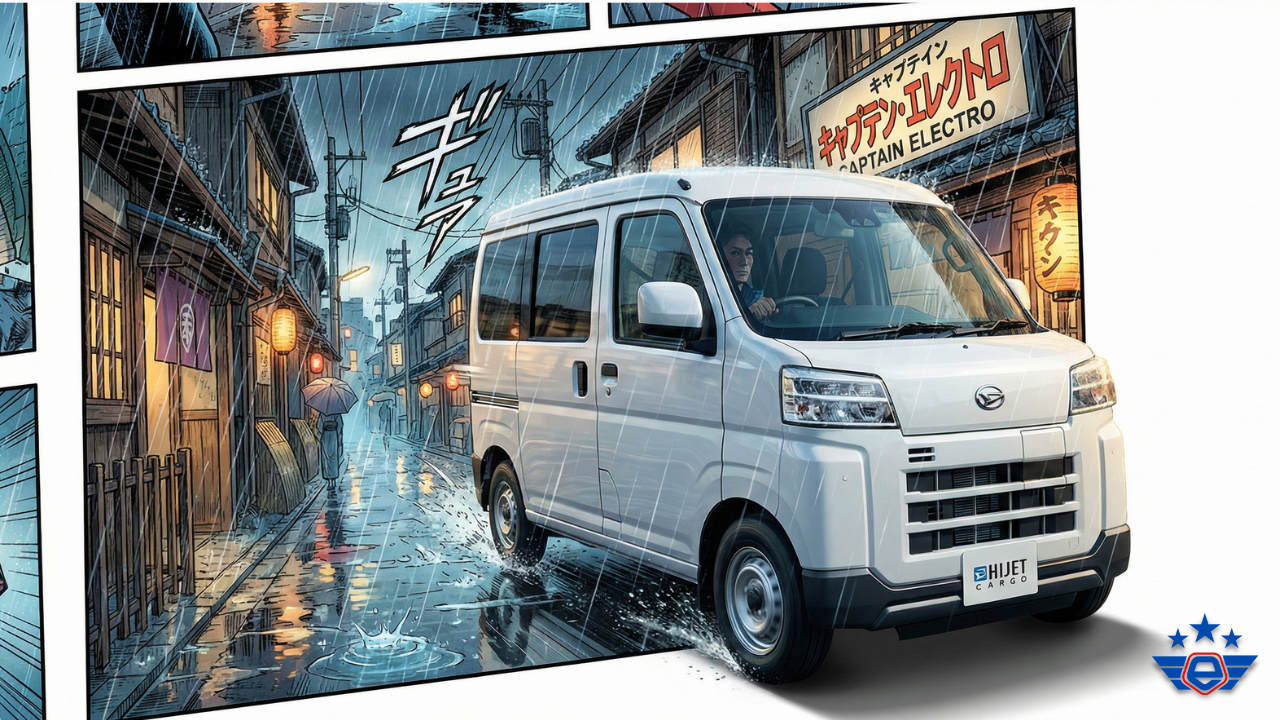
Image Credit: Captain Electro.
Most modern electric vehicles are about as interesting as reading the terms and conditions of a software update. Sure - they’re all sleek and silent. And as soulful as a toaster. Thankfully, out of the mists of Japan comes something that actually saves the day and makes me think that not all is lost. At least not yet. It’s not a supersonic sedan or a levitating lorry either - it is a tiny, electric box on wheels.
The new Daihatsu e-Hijet Cargo (and its Toyota twin, the Pixis Van BEV) solves a problem you didn’t even know you had with a piece of plastic that probably cost about fifty cents to make. But before we get to the wizardry, let’s look at the specs. This wee beastie is powered by a 36.6-kWh battery shoved under the floor. That gives it a cruising range of roughly 160 miles. No, you can’t cross the Sahara in that. It’s a delivery van for Tokyo, not a camel.
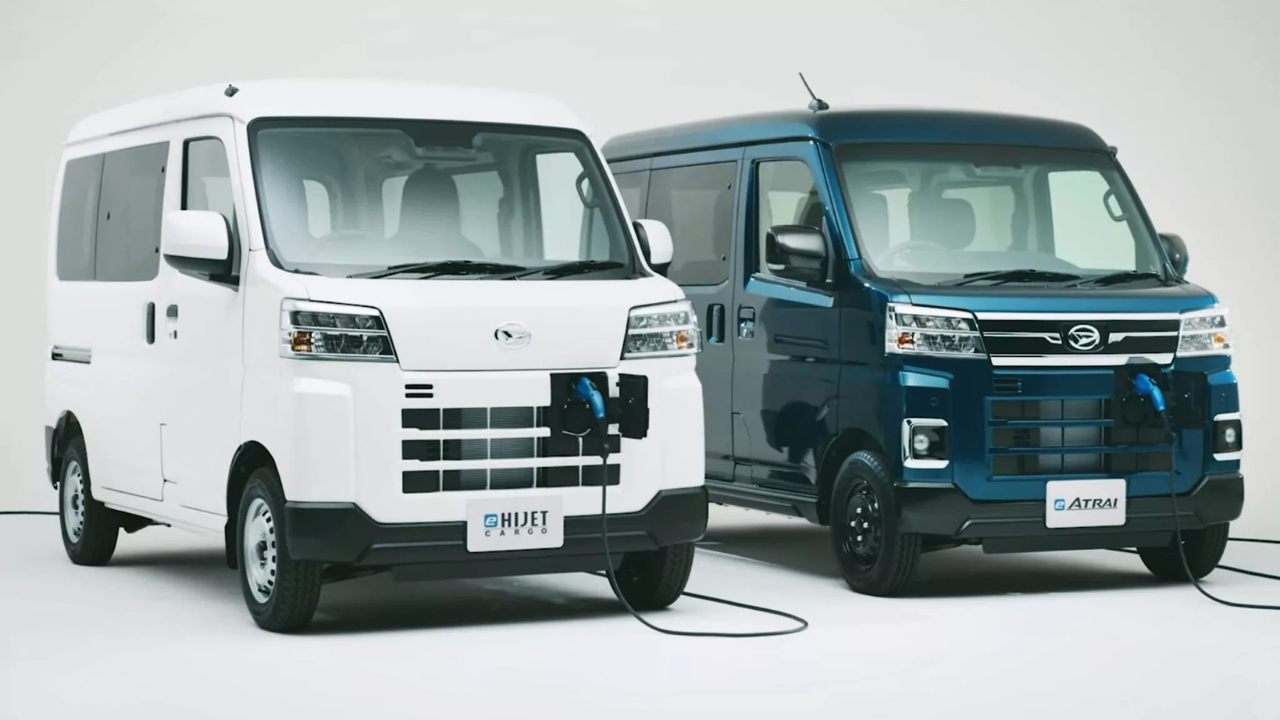
Image Credit: Daihatsu.
This tiny van has an electric motor that produces a thunderous 63 horsepower - about the same power output as an angry blender. But because it’s an EV, it’s rear-wheel drive and has a rear e-axle, it’ll probably do a decent drift if you hit a patch of oil on a rainy Tuesday. And you know how modern EVs brag about Vehicle-to-Load (V2L) capabilities? That clever tech where you can plug your espresso machine into your car during a power cut? Well, this van has that. It can pump out 1,500 Watts of juice from a standard outlet on the dashboard.
But Daihatsu realized something the boffins at Tesla missed: if you run a cord out the window to power your drill in the rain, the inside of your car gets wet. Their solution? A plastic insert. A literal chunk of plastic that fits over the window glass with a little hole for the cable. It’s the sort of low-tech, high-intelligence engineering that makes me want to jump with joy like a kid. Toyota and Daihatsu engineers solved a complex mathematical equation by just counting on their fingers. It worked.
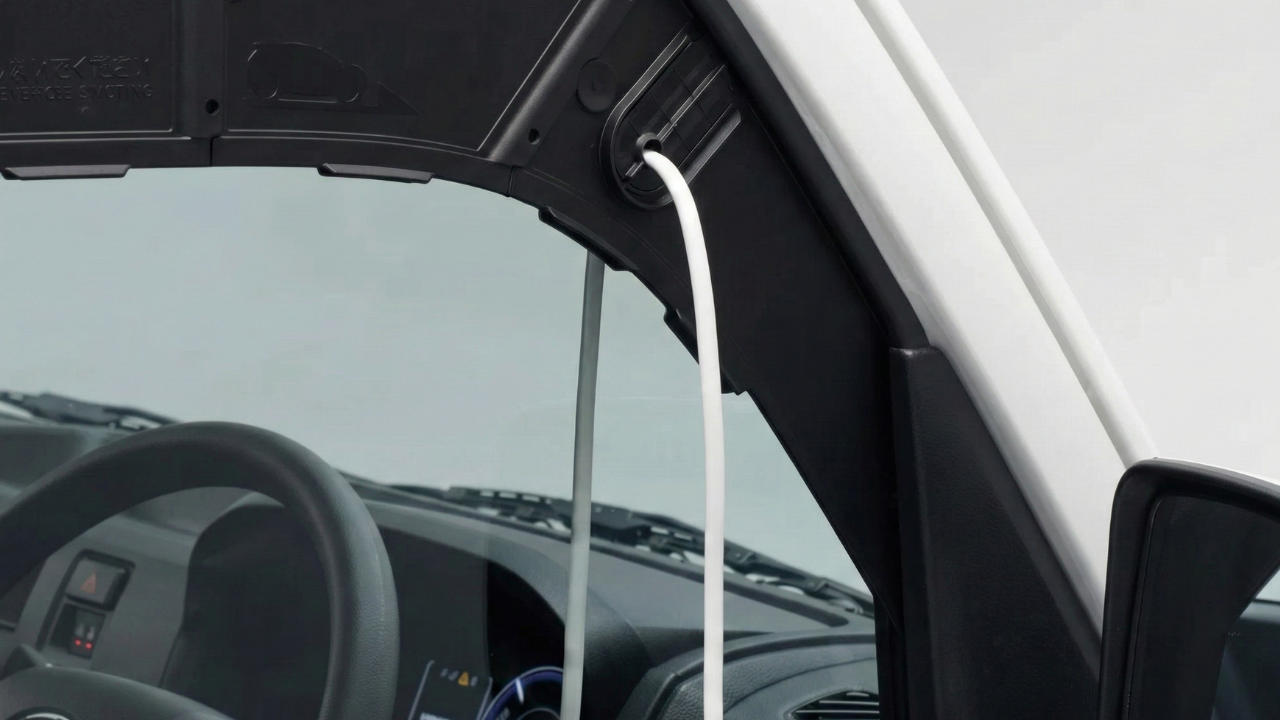
Image Credit: Daihatsu.
Now - the bad news. You can’t have one. Unless you live in Japan and have about $21,000 burning a hole in your pocket, you’re out of luck. And even then, they are building them in numbers so small - about 300 a month - that you’ve got a better chance of being struck by lightning while winning the lottery.
It’s a tragedy, really. This little van, which is roughly 11 feet long and 4.8 feet wide, can carry 772 pounds of cargo - exactly the same as its gas-powered grandfather. It’s practical, very clever, and it has a plastic window widget. It is, without a doubt, the most sensible vehicle I have seen in a very long time. It’s a shame, really, that it will never be sold in America, where we prefer our trucks to be the size of apartment buildings.
Enjoyed the article? Give us a 'LIKE' and FOLLOW us on MSN! Or Buy us coffee :) Thank you for your support!
