

Image Credit: Captain Electro.
I used to believe that electricity is best reserved for heating one's tea kettle or animating the corpse of a monster in a gothic novel. Until probably 2020, I'd say to anyone who was willing to listen, that electricity had no business propelling large metal objects through water. And yet, here I am, eating my own words - seasoned, of course, with a pinch of skepticism and a dram of the finest single malt to wash down the bitter taste of progress.
Why so dramatic? Because something unnatural has occurred in Tasmania. If you've never been to Tasmania, imagine Scotland, but drag it to the bottom of the map and populate it with marsupials that sound like they're possessed by demons. In this remote corner of the world, on Hobart's River Derwent, a true monster has awoken. But unlike the great beasts of maritime lore, this one didn't roar. It didn't belch black smoke like a proper mechanical animal should. It hummed.

Image Credit: Incat.
The vessel in question is Incat Tasmania's Hull 096. A name that sounds less like a groundbreaking ship and more like a parking spot at a shopping mall. But don't let the dry nomenclature put you off - this dinghy is something else entirely.
Measuring in at 426 feet (130 meters) long, it is at this very moment the world's largest battery-electric ship. For my American friends - that's roughly the length of one and a half football fields, or about 450 full-sized pickup trucks lined up bumper to bumper - a unit of measurement I believe is now standard in Texas.

Image Credit: Incat.
Usually, when a ship of this magnitude decides to leave the dock, it is an Event with a capital E. The engines fire up, the birds flee the county, and the water turns into a frothy soup of diesel fumes and raw power. It's visceral. It's exactly what I used to love. But Hull 096? It slid away from the pier with all the drama of a librarian pushing a cart of encyclopedias.
It was moving under its own power for the very first time, kicking off its harbor trials. No exhaust plume. No rumble. Just the eerie, quiet churn of eight electric waterjets. It's unnatural. It's like watching a ghost ship, only this one is made of aluminum and costs more than the GDP of a small island nation.

Image Credit: Incat.
Speaking of cost, the folks at Incat have remained devastatingly tight-lipped about the price tag. They say it's "undisclosed," which in my experience is billionaire code for "If you have to ask, you're too poor to even look at the brochure." But considering the tech packed inside, we are looking at hundreds of millions of US dollars.
When Incat first dreamt this vessel up for the South American operator Buquebus, it was supposed to run on Liquified Natural Gas (LNG). A sensible, combustible fuel. But then, fuel prices went on a rollercoaster, and battery tech got cheaper. So, in 2023, they decided to swap the gas tanks for Duracells.

Image Credit: Incat.
The result is an energy storage system that terrifies me - more than 275 US tons (250 metric tonnes) of batteries. That is the weight of roughly 150 mid-sized family SUVs. All sitting inside a boat. I'm no naval architect - my understanding of buoyancy is largely limited to dropping biscuits in tea - but filling a ship with nearly 300 tons of heavy metals seems counterintuitive to the whole "floating" concept. Yet, Incat's chairman, Robert Clifford, insists this is a leap into the future.
The capacity of this battery bank is over 40 MWh. To give you a sense of scale, a standard Tesla Model 3 has a battery of about 60 kWh. This ship has the equivalent of roughly 660 Teslas strapped together. It is four times larger than any maritime battery installation that has ever existed. It's enough energy to power a small Scottish village through a very dark, very cold winter.
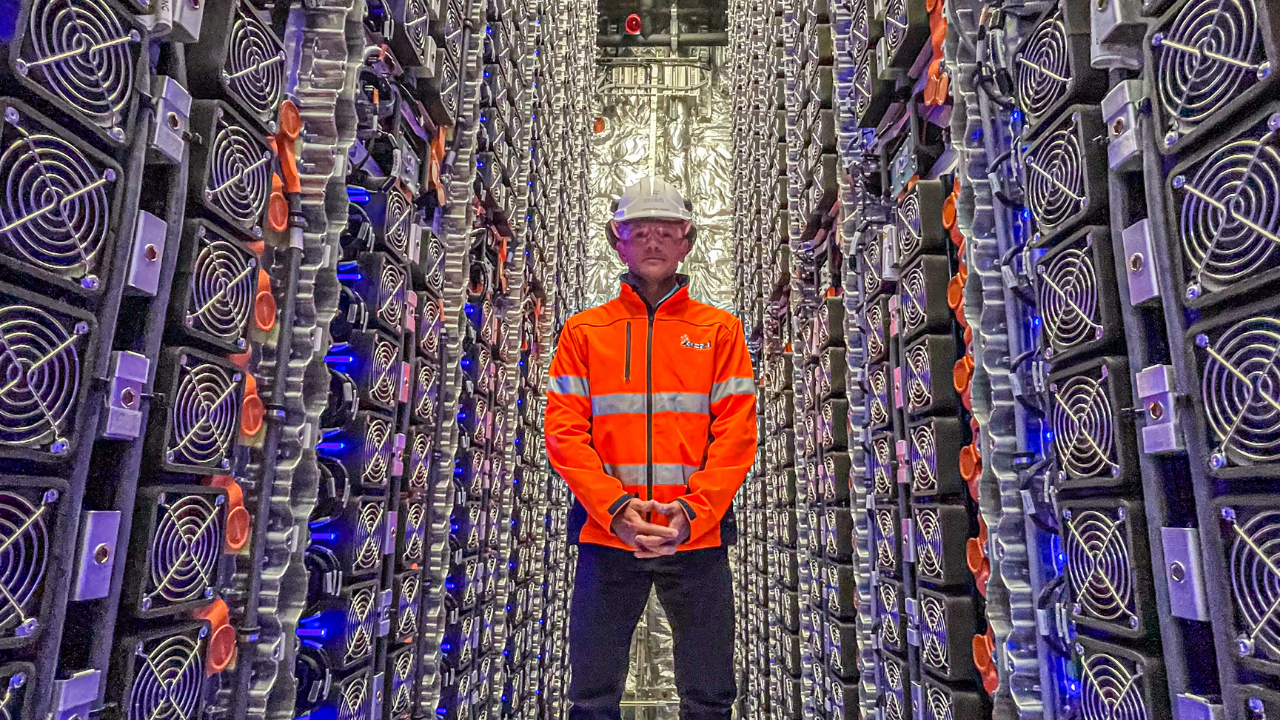
Image Credit: Incat.
All this power drives the waterjets to ferry up to 2,100 passengers and over 220 cars. I don't think anybody has measured the acceleration times, since ships don't really "sprint" so much as they "gather momentum." But with the instant torque of electric motors, I imagine the takeoff feels less like a boat and more like a very large, very wet rollercoaster.
The trials earlier this month were the first time the ship moved solely on this electric muscle. Up until December 2025, the testing was just stationary validation - essentially plugging it in to make sure it didn't explode. But now, it's out there, bobbing about on the River Derwent, testing maneuverability and control systems.

Image Credit: Incat.
This is the turning point. It's the proof of concept. It's the moment we realize that large-scale electric shipping is no longer a fever dream of environmentalists, but a physical, floating reality. The ship is destined for duty in South America, shuffling people between Argentina and Uruguay. It's a short hop, which is good, because I imagine recharging 40 MWh takes a bit longer than topping off a tank of diesel.
Despite all my love for the combustion engine - the noise, the smell, the mechanical symphony of it all - I am impressed. There is something so cool about a vessel this size gliding through the harbor in near silence. It's stealthy and sleek. And it's the future, whether I like it or not.
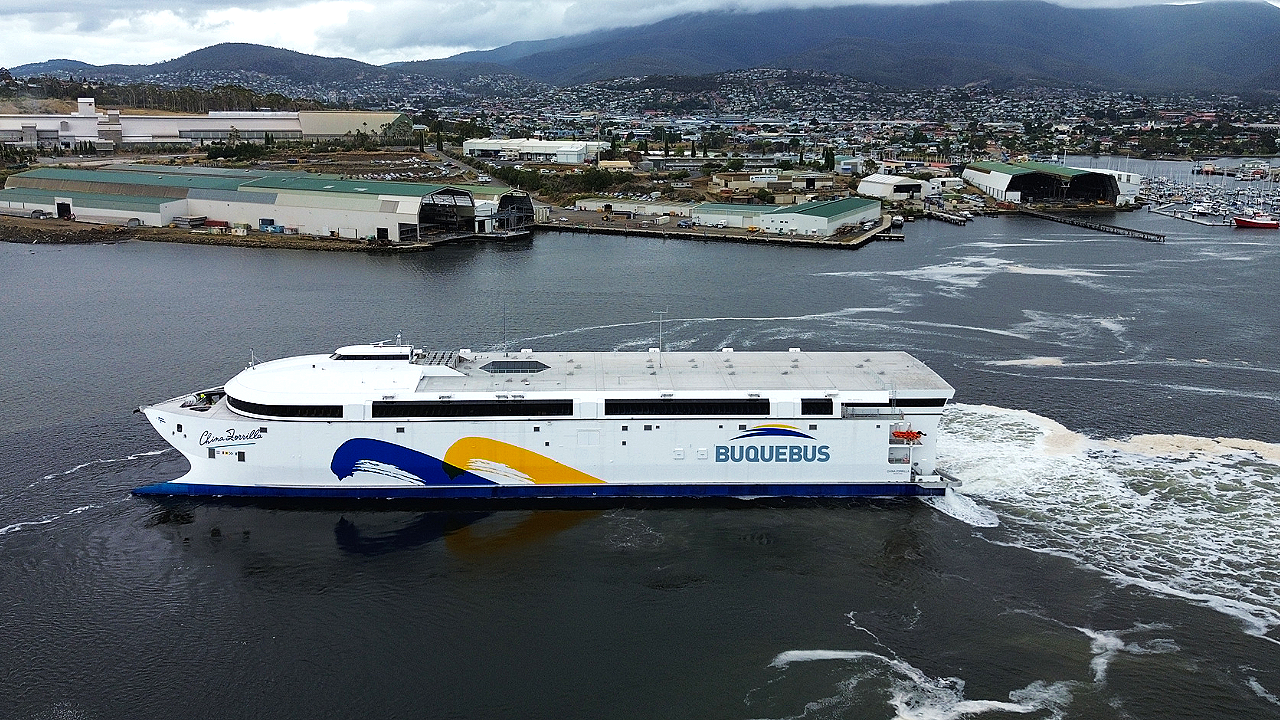
Image Credit: Incat.
Hull 096 is real. It actually floats and it carries enough electricity to jump-start Frankenstein's monster with his entire extended family. And it does it all without waking the neighbors. The future of shipping is here, and it's going to be very, very quiet. I guess I'll have to get used to it.

Image Credit: Incat.
Enjoyed the article? Give us a 'LIKE' and FOLLOW us on MSN! Or Buy us coffee :) Thank you for your support!
