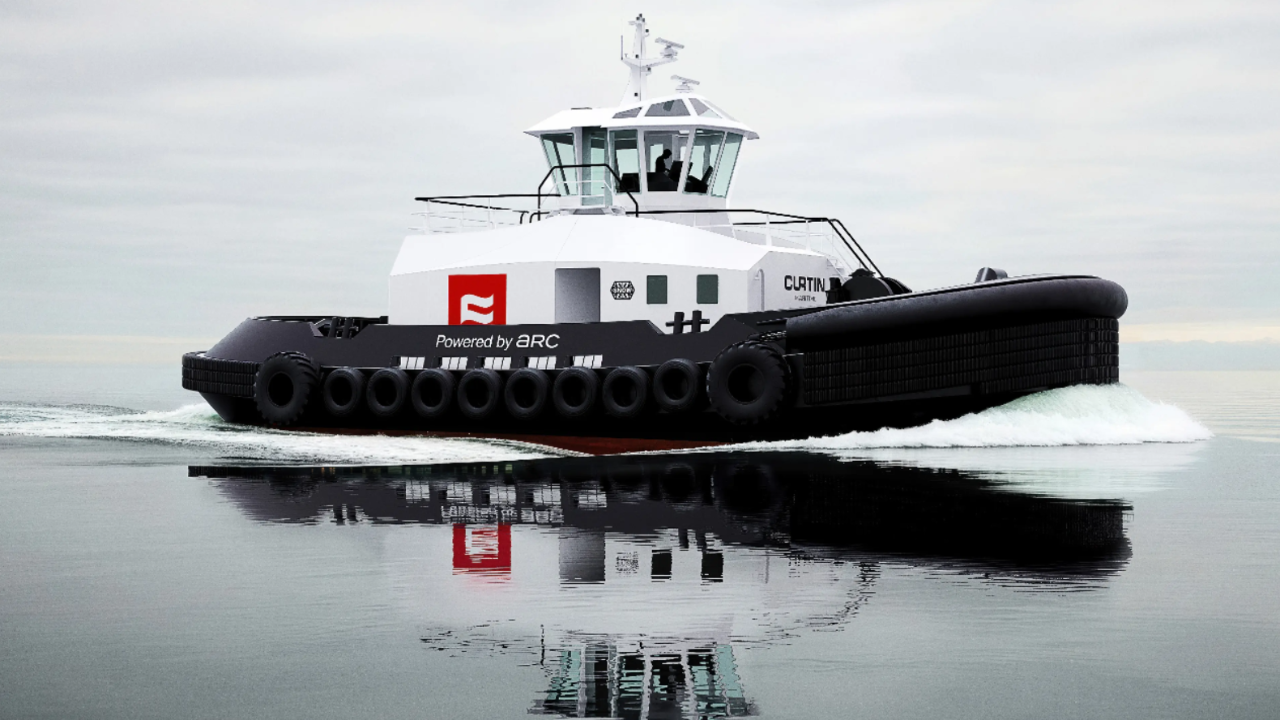
Image Credit: Arc.
Here's something you don't see every day. The one constant in all the glorious mechanical mayhem that I call my life has been noise and fumes. Especially at a port. A harbor is a cathedral of clatter, a symphony of diesel chugging. But it seems some folks from California have decided it's all a bit much.
The folks in question are from a company called Arc Boats. If the name sounds familiar, it's because they're the ones who've been building sleek, silent, and terrifyingly fast electric speedboats for the well-heeled. They're a young crew, founded in just 2021 and staffed by a bunch of clever clogs who used to build rockets and electric cars for those other chaps in California. You know the ones. Now, they've set their sights on something a bit less glamorous than a weekend waterski machine: the humble tugboat. And not just one. They've signed a deal worth $160 million to build eight of them.
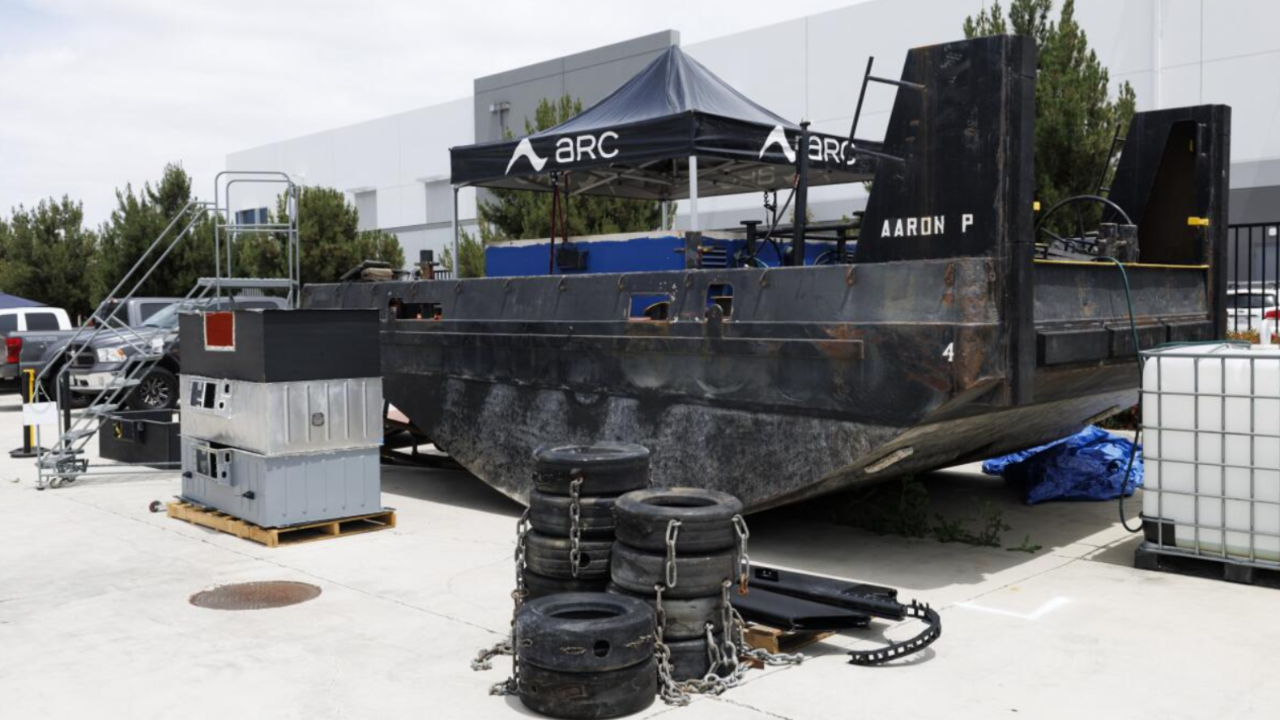
Image Credit: Arc.
We are talking the big stuff here. Arc has partnered with a serious maritime operator, Curtin Maritime, to build what are called "ship assist" tugs. Their job is to nudge, push, and pull the colossal container ships - the ones carrying all your Amazon packages and flat-pack furniture - around the tight confines of a port. It requires immense power and delicate precision.
Each of these new tugs will be packing 4,000 horsepower. That's way more than a Bugatti Chiron, and even more than the Yangwang U9 Xtreme. It's more than a squadron of WWII fighter planes. It is, to use the technical term, a metric boatload of shove. All this power comes from electric motors, which are juiced by an enormous 6-megawatt-hour battery pack - that's enough electricity to power my entire neighborhood for a day, or to keep my laptop running until the sun consumes the earth.
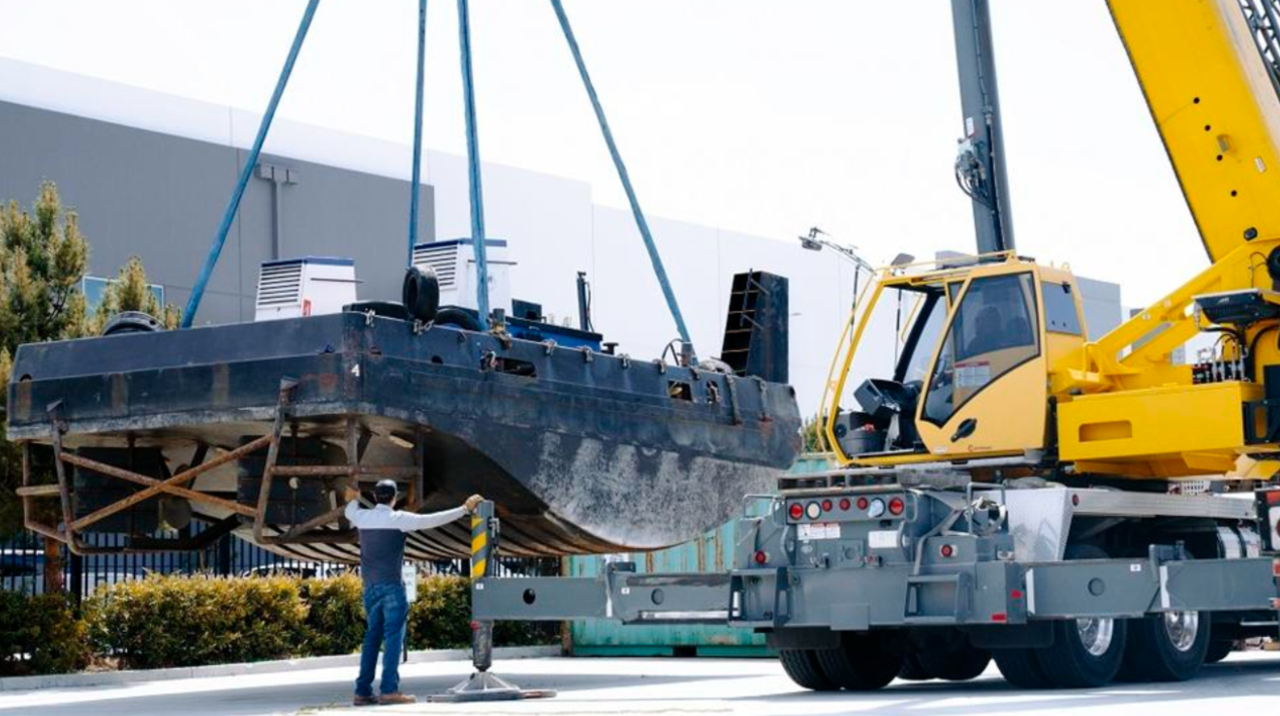
Image Credit: Arc.
I can hear the skeptics already. "An electric tugboat? What happens when the battery runs out halfway through parking a 1,300-foot-long vessel? Does someone get out the world's longest extension cord?" It's a fair question, and one Arc has apparently considered. This tug is technically a hybrid. Tucked away somewhere in its hull is a diesel generator. But - and this is the important bit - it's not the main event. It's the backup singer, the understudy, the emergency toolkit you hope you never need. The boat is designed to do its entire day's work on battery power alone, plugging into a massive megawatt charger back at the dock to refuel its electrons.
The real genius here isn't just swapping a grimy diesel engine for a silent battery. The entire experience of operating the boat changes. Captains of traditional tugs have their view obstructed by massive exhaust stacks belching out black smoke. On Arc's tug? No stacks. Just a panoramic, 360-degree view of everything they're about to not crash into. Electric motors deliver instant torque and infinitely precise control, which is rather useful when you're trying to maneuver a $200 million ship loaded with a billion dollars' worth of cargo without leaving a scratch.
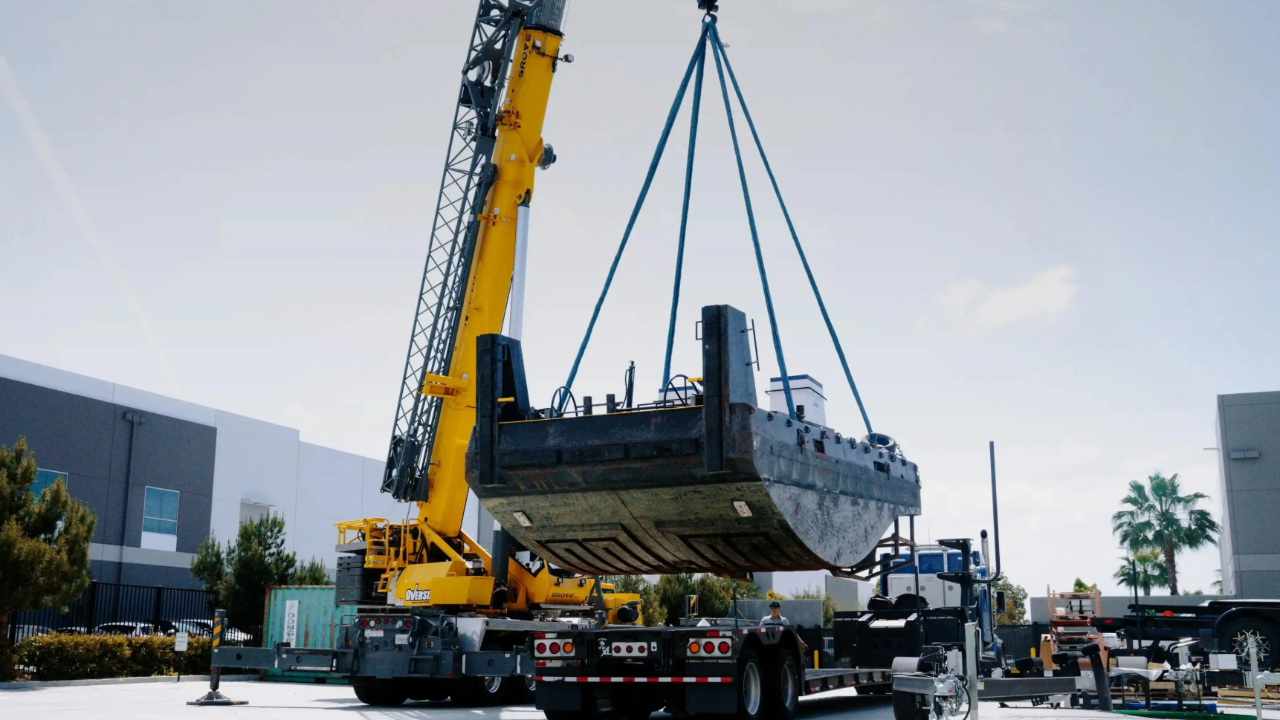
Image Credit: Arc.
Here's the part that really got my attention, though. The most shocking thing about this whole $160 million deal is that it's not being funded by some do-gooder government grant or a green initiative. This is a commercial decision made by two companies that want to make a profit. Curtin Maritime, a company that's been in the tugboat game for 28 years, crunched the numbers and concluded that going electric simply makes better business sense.
Think about it. A diesel tugboat engine is a fantastically complicated piece of machinery with thousands of moving parts that need constant, expensive maintenance. They spend a huge amount of their lives just idling at the dock, burning fuel to go nowhere while powering onboard systems. The Arc tug, on the other hand, can just sip from its battery while it waits. An electric motor has what, one moving part? Uptime is maximized, and maintenance bills are slashed. Fuel costs, which are notoriously volatile, are replaced by the much more stable and predictable cost of electricity.

Image Credit: Arc.
When you factor all that in, Arc claims the unsubsidized cost of building one of their electric tugs is already competitive with a new diesel one. But the company also points out that diesel has been getting massive subsidies for decades. And let's not forget that every time a diesel engine fires up, it pumps particulates into the air, adding to smog and health problems. And we pay for that through healthcare costs and environmental damage.
This really is nothing short of a tectonic shift. We've been sold on the idea that electrifying the heavy-duty trucks, planes, and ships was just a distant dream. And yet, here we are. A hard-nosed, profit-driven company is betting big on batteries. A decision was made on a spreadsheet - not on a placard at some protest. It looks like this revolution will be silently pushing a container ship into a berth, and saving a bundle of cash while doing it.
