
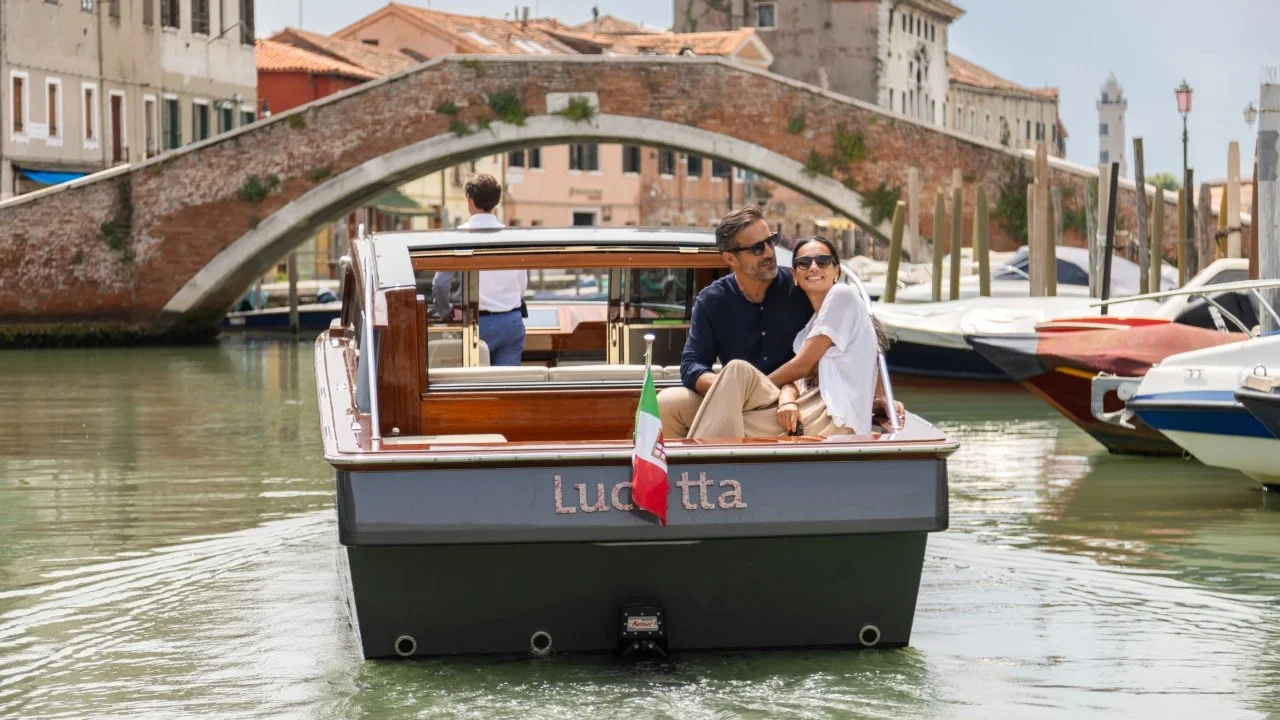
Image Credit: Nauta Design/Repower.
Venice - the city of love, art, and about a million tiny bridges. It's a place where romance is supposed to hang in the air, thick as the morning fog over the Grand Canal. The reality is that the air is usually thick with something else. The familiar, heavy, and smelly diesel fumes. The soundtrack to this floating masterpiece has been the clatter, cough, and grumble of overworked marine diesel engines powering the city's iconic water taxis for what feels like forever. It's about as romantic as a tractor pull.
You glide past centuries-old palazzos, trying to soak in the history, while your ears are being attacked by a noise that suggests the boat's engine is actively trying to escape its metal prison. Your gondola ride, that meant to be a serene experience, is interrupted by the wake and roar of a taxi ferrying impatient tourists to their next overpriced coffee. It's a big problem, really. How do you preserve the magic of a city that relies on combustion-powered boats?
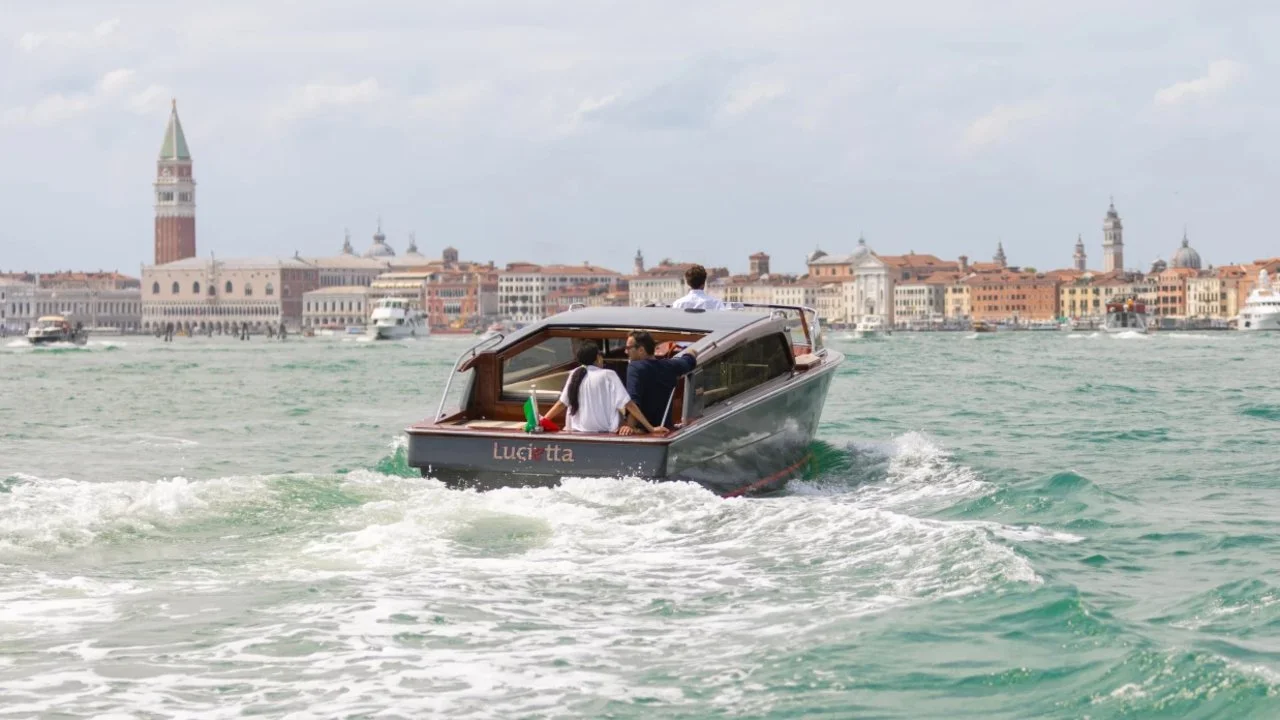
Image Credit: Nauta Design/Repower.
It seems a band of clever folks from Italy and Switzerland have been pondering this very question over some espressos and fine chocolate. And they've come up with an answer that is simple and quite brilliant. It's called the Lucietta, and it's an all-electric water taxi that might just be the best thing to happen to Venice since it was built.
The Lucietta isn't some half-baked university project - it's a serious piece of kit born from a collaboration between Nauta Design, a Milanese studio that pens superyachts, Cantiere Serenella, an Italian shipyard that knows its way around a hull, and Repower, a Swiss company that handles all the electric magic. Thankfully, they didn't just draw a boat and stuff it with batteries. Instead, they studied the original drawings of old taxis and even talked to the drivers themselves.
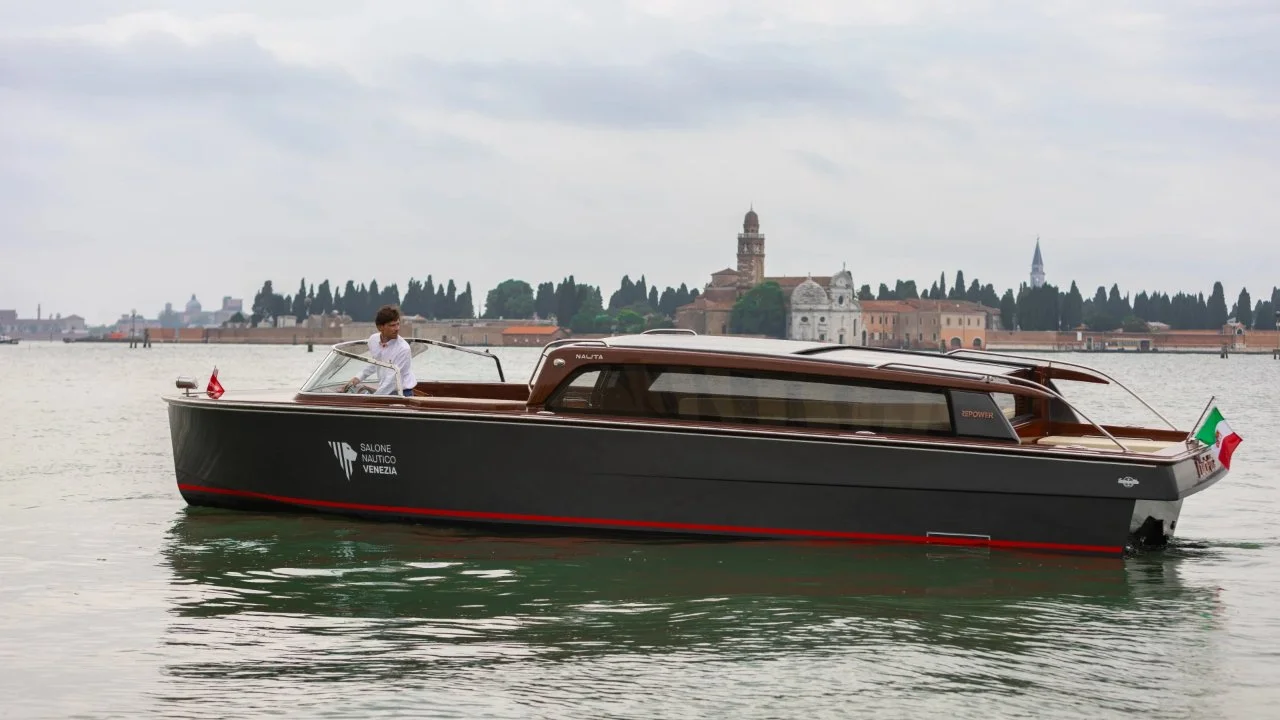
Image Credit: Nauta Design/Repower.
The result is a vessel that looks, at first glance, like it belongs. It's not a futuristic space pod that would stick out like a sore thumb. It's a modern, sleek reinterpretation of the classic form. It has to be. The canals, bridges, and moorings of Venice dictate the rules. Your boat can only be so long, so wide, and so tall. The Lucietta respects this, measuring a tidy 30.5 feet long, 7.4 feet wide, and a bridge-ducking 6.8 feet high. It's built to work with the city, not against it.
Underneath that respectful skin, however, is where the real revolution is happening. The hull is made of lightweight carbon fiber, and the design cleverly incorporates recycled glass. It's strong, nimble, and has its green credentials sorted before you even get to the main event: the powertrain. Power comes from a 200-kW electric motor, which delivers a rather healthy amount of shove. That's actually more power than you get in a standard Ford Mustang Mach-E. In a boat.
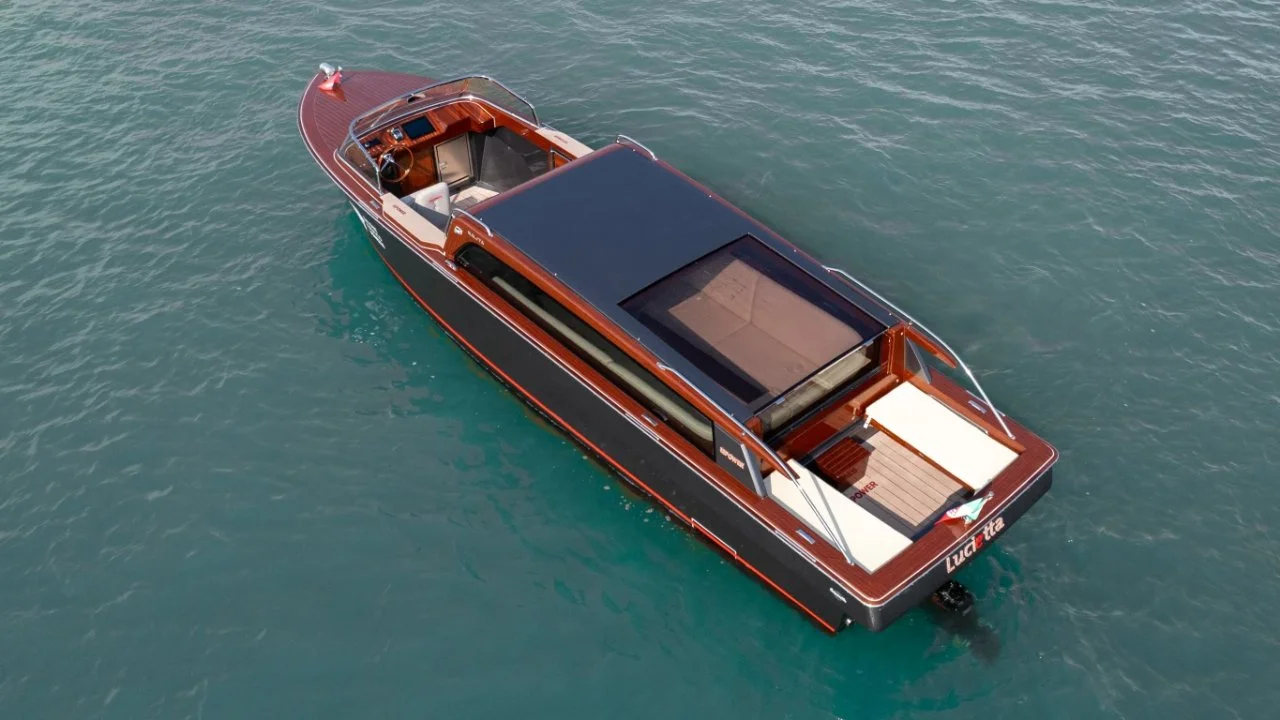
Image Credit: Nauta Design/Repower.
Feeding that motor is a colossal 180-kWh battery pack. For anyone not fluent in battery-speak, that really is an enormous amount of juice. This setup is good for a top speed of 34.5 mph, which is more than enough to get a bit of wind in your hair or make a swift escape if you accidentally insult a local chef's pasta.
But speed isn't the point here. The real magic happens at a more civilized pace. The creators claim that at a typical lagoon cruising speed of between 8 and 12 mph, the Lucietta can run for a full working day without needing to plug in. A full day. This is the detail that makes it a viable business proposition, not just a rich person's toy. No stopping mid-shift for a three-hour recharge. Just silent, emission-free cruising, all day long. The only sound you'll hear is the water lapping against the hull and, presumably, the gasps of amazed tourists.
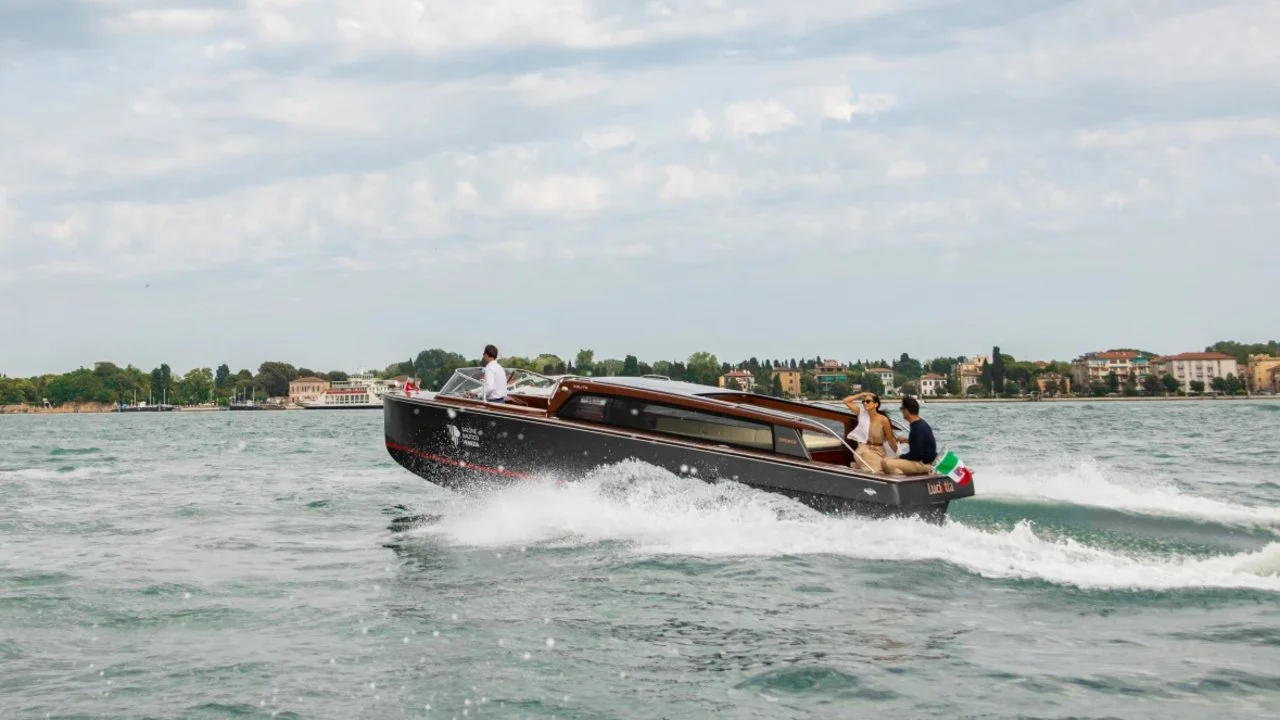
Image Credit: Nauta Design/Repower.
Inside, it's all about civilized comfort for its 14 passengers. You get a choice of seating in a lush, shaded mid-section or an open-air stern for soaking up the Italian sun. There are USB sockets to charge your phone (a non-negotiable feature in the 21st century), a Fusion audio system, and a synthetic teak deck that looks the part without harming a single tree. Most importantly, there's an 11-gallon fridge. That's more than enough space for water, soft drinks, and a decent supply of prosecco. This is Italy, after all.
Of course, there are two questions on everyone's mind. How much does it cost, and when can I ride in one? The answer to the first is, predictably, a very coy silence. The builders are currently just showing the Lucietta off at fancy boat shows and film festivals. This is a classic "if you have to ask, you can't afford it" situation. As for when they'll start delivering them… who knows? But the fact that it exists, and that it works so beautifully, is a massive step. It's a silent, elegant, and powerful piece of evidence that the future of marine tourism doesn't have to be noisy and dirty. And for that, I say bravo.
