Image Credit: Candela.
If you've ever had the pleasure — and I use that word with the kind of crushing sarcasm I reserve for discussing British weather — of commuting through Washington D.C., you know the drill. It's a choice between the agonizing crawl of the 395 highway or the wheezing death march of the Orange Line subway. It is a pure misery designed by someone who clearly hates efficiency and possibly daylight.
Can you imagine my surprise when a group of well dressed, polite Scandinavians showed up on the Potomac River and suggested we should just fly over this whole mess? Oh, boy... And they've even brought what looks like a sleek version of a commercial bathtub with them, claiming this contraption can fix all the sins of American infrastructure. I'm skeptical, obviously, since the only thing that moves quickly in this city is news leaking from the West Wing, but here we are.
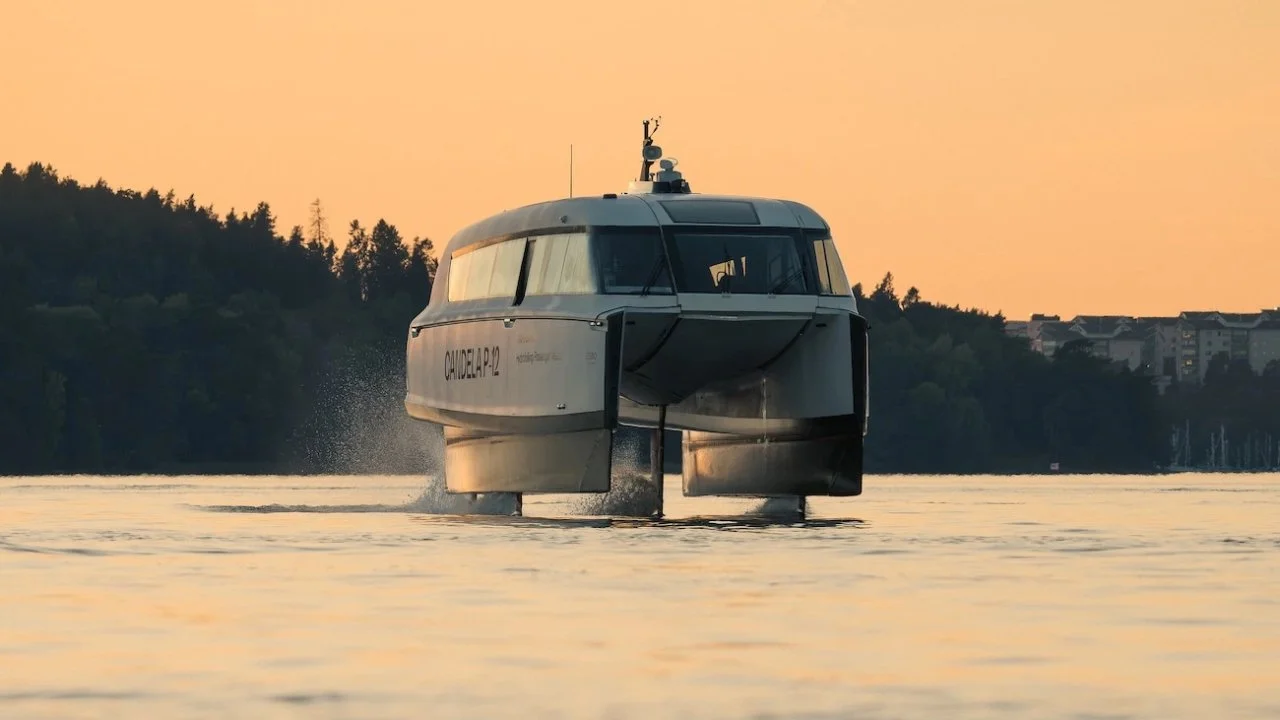
Image Credit: Candela.
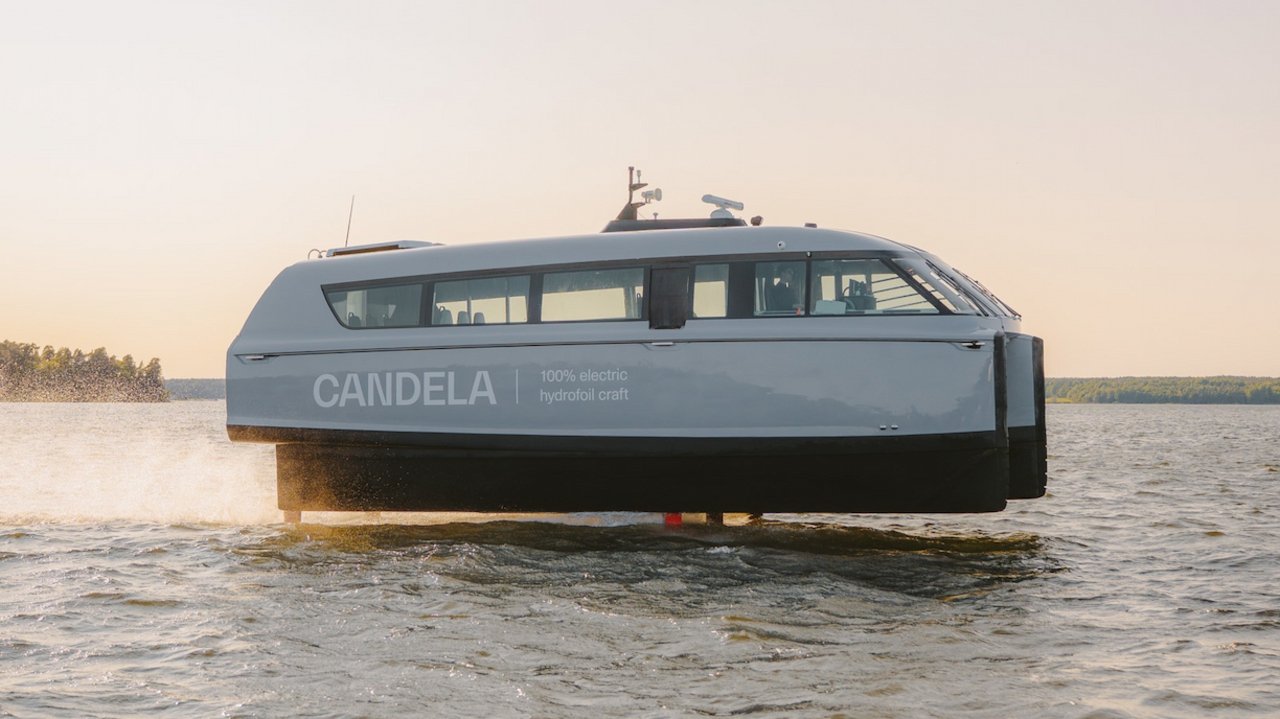
This whole spectacle, which runs through October 23rd near the Swedish Embassy, is the U.S. demo debut of the Candela P-12 electric hydrofoil shuttle. Hydrofoil is a wonderfully complex word designed to make us ordinary folk feel stupid, but the concept is beautifully simple. It's a boat with wings — hidden under the water, mind you. Once it hits speed, the boat hoists itself up on these submerged carbon fiber pinions, and the main hull clears the water completely. It's less of a boat and more of a reverse submarine.
The second this happens, the vessel is, for all intents and purposes, flying. Why fly? Because water is an absolute drag. Literally. By shedding that friction, the P-12 cuts drag by 80%. This, in turn, means it can cruise silently and efficiently without having to gulp down expensive diesel fuel. And because it's not slamming through waves, the ride is supposedly so smooth it actually prevents seasickness.

Image Credit: Candela.
The P-12 Shuttle is a proper vessel, measuring just over 39 feet, 4 inches long and spanning 14 feet, 9 inches across the beam. It's built to ferry thirty seated passengers — a small crowd, but a manageable one. To get this nearly forty-foot bus airborne, it uses Candela's proprietary C-POD electric motors, which provide a combined peak output of roughly 456 horsepower. That's enough muscle to launch an average sports car, except in this case it's dedicated to lifting a small ship.
And lift it does. The P-12 needs to hit about 16 knots before it reaches foiling altitude. According to Candela, it can punch up to that lift-off speed in about sixteen seconds, and once airborne, it skips across the surface at a cruising speed of around 25 knots, with a top speed flirting with 30 knots - or nearly 35 mph. That's not blistering by automotive standards, but on the water, that's faster than most traditional ferries dare to dream, especially when they're usually shackled by rules designed to stop them sinking the local coastline with their wakes.
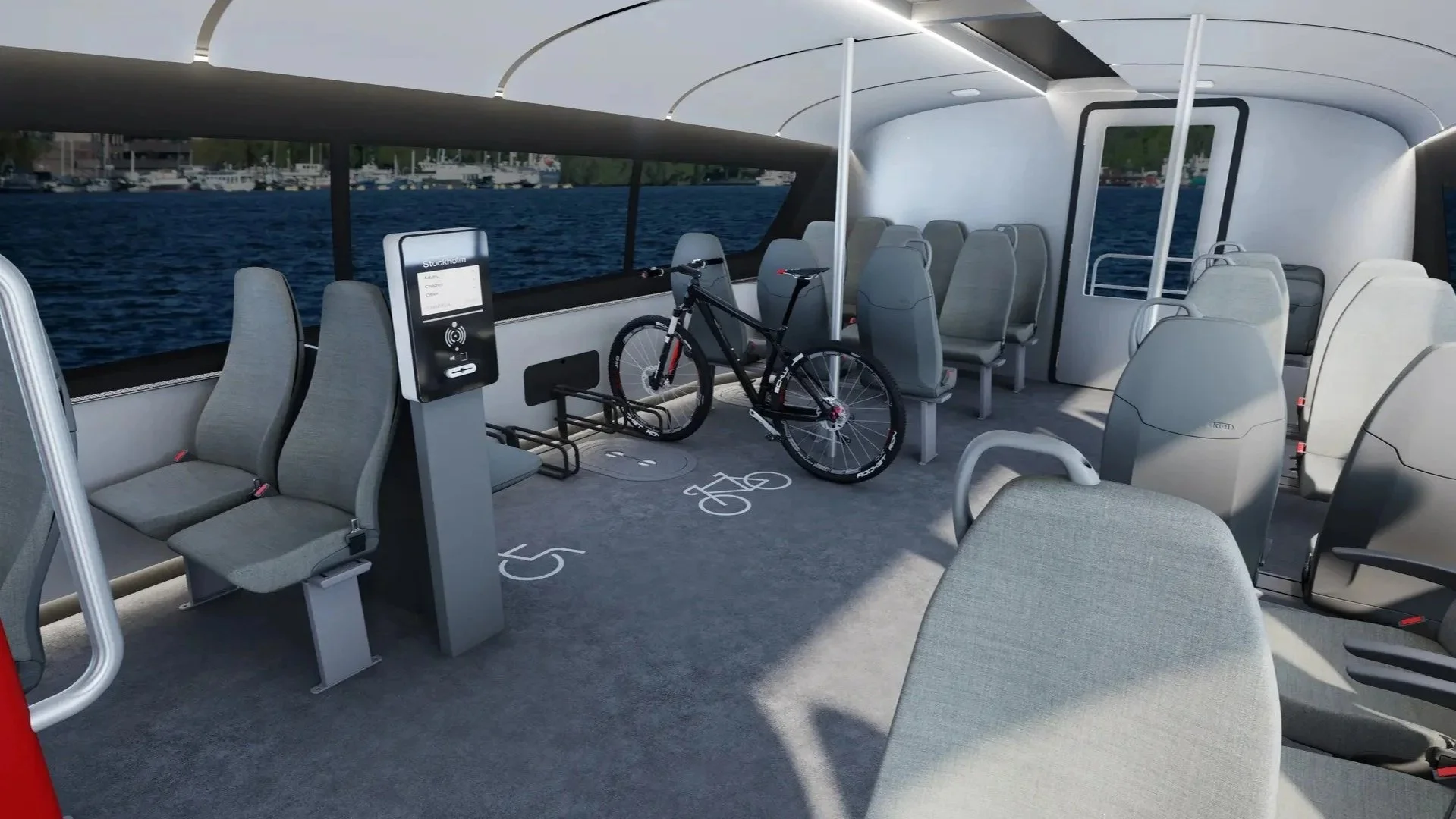
Image Credit: Candela.
The battery is another fascinating piece of this flying puzzle. Traditional electric ferries need battery packs the size of a small suburban home. But because the P-12 is so efficient, it can get away with a modest 252 kilowatt-hour battery. That's a generous pack by any standard, but it's the efficiency that's doing the heavy lifting, giving the vessel a useful range of around 46 miles at cruising speed. For a typical urban water taxi route, that's easily enough for a two-hour shift before needing a recharge.
Now, we come to the part that will make D.C. power-brokers weep with joy — or possibly suspicion. Because the Swedes aren't just selling speed; they're selling time. That wretched crawl from Georgetown across the water to Reagan Airport usually takes about twenty minutes in a car if traffic is behaving, or a truly leisurely forty or so minutes on public transport. The P-12 shuttle promises to cover that route in six minutes. A run from Alexandria to The Wharf is a quiet, comfortable, ten-minute scoot. That's likely faster than your rideshare app can manage to locate a driver who hasn't given up hope yet.

Image Credit: Candela.
The cost, for those in municipal procurement departments who now have their calculators out, is also surprisingly palatable, considering the technological witchcraft involved. The commercial P-12 Shuttle is priced at approximately $1.9 million. That might sound like a lot, but the secret weapon here is operational expenditure. Since the boat uses so little energy and relies on the quiet electric C-Pods instead of temperamental diesel lumps, the running costs are reported to be about 60% lower than a diesel ferry. That puts them squarely in line with land-based mass transit options like a regular bus, but this one flies.
This cost structure, paired with an ingenious regulatory loophole, is where the P-12 genuinely shines. Traditional ferries are notorious for creating massive wakes, which chew up shorelines and force cities to impose debilitating speed restrictions — especially in built-up areas like the Potomac. Because the P-12 lifts clear of the water, it produces virtually no wake. Candela is essentially telling cities: "Grant us an exemption, because we aren't creating a tidal wave," which means the vessel can run at high speeds even in no-wake zones, unlocking an entirely new and speedy layer of transport on previously unusable stretches of water.
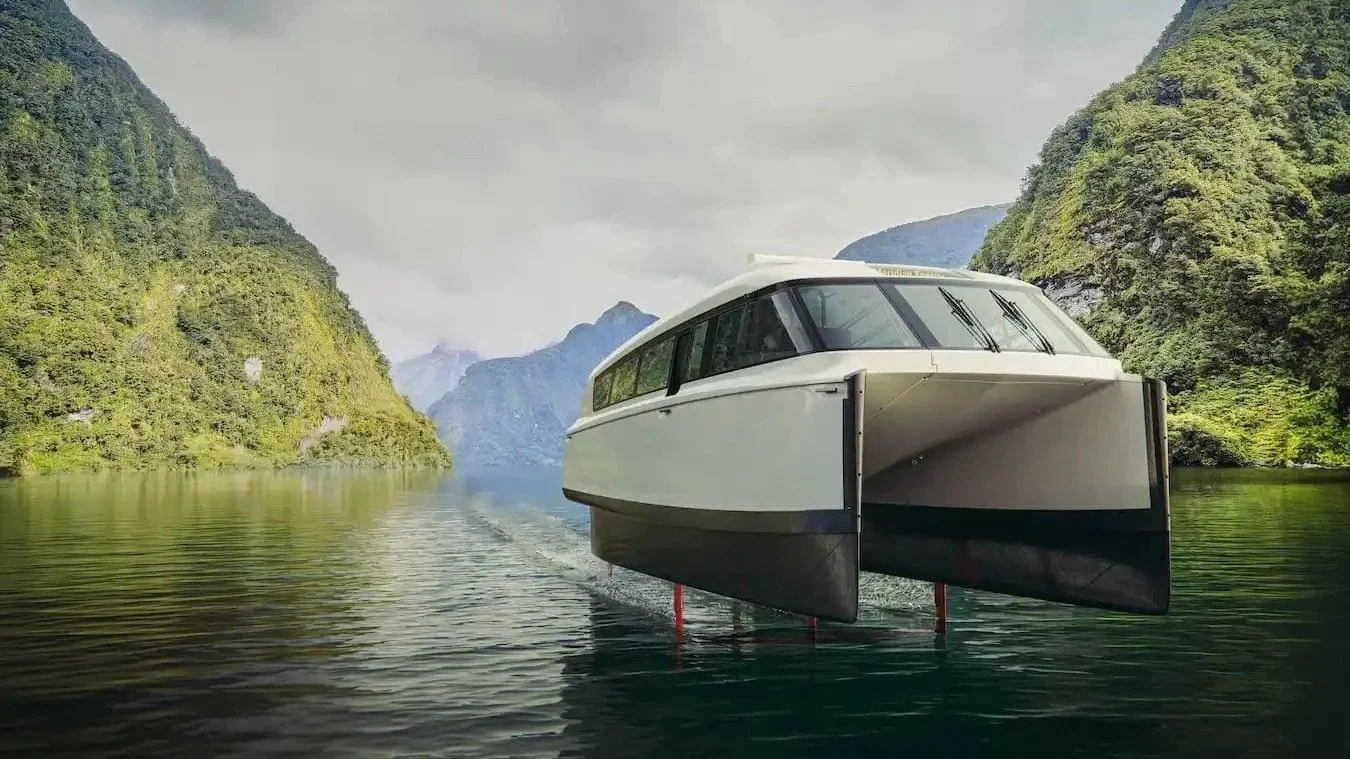
Image Credit: Candela.
Gustav Hasselskog, Candela's founder, put it best: "We're not just replacing diesel ferries — we're enabling a new layer of transport by utilizing the underused waterways." It's an elegant summary of a concept that is already integrated into the public transport system in Stockholm, where it has successfully cut some commute times in half. With over forty boats on order — making it the best-selling electric passenger vessel in the world — it's clear that cities from Lake Tahoe to Mumbai, and even the futuristic confines of Saudi Arabia, see the potential.
The next time you find yourself staring at the taillights on the 395, remember the Swedes and their flying bathtub. They've landed on the Potomac not just to show off their cool electric tech, but to offer concrete proof that we don't have to simply pave more asphalt to solve congestion. We can simply take to the water — or a few feet above it — on a silent, smooth, and surprisingly economical little ferry. The future of urban commuting might look less like a crowded bus and more like a luxury ride on the fastest, most efficient electric vessel ever built.
