
Image Credit: Captain Electro.
Whether I like it or not, my attention has been dragged toward the electric revolution. I'm specifically curious about the bit of it that promises to let us soar over traffic jams. Yes, flying cars. Of sorts. "eVTOLs," as the marketing departments insist on calling them to sound less like a cartoon from the 1960s.
A lot of these contraptions are pure vaporware - pretty pictures rendered by a teenager in a basement. But every now and then, something comes along that makes you pause, scratch your chin, and say, "Aye, that might actually not kill me." Enter the Horizon Aircraft Cavorite X7. I first caught wind of this Canadian invention back in 2021 with its predecessor, the X5. Now, as of Wednesday, January 21, 2026, they've updated the big brother X7. And in a brave move that defies all modern logic, they've actually taken bits off.
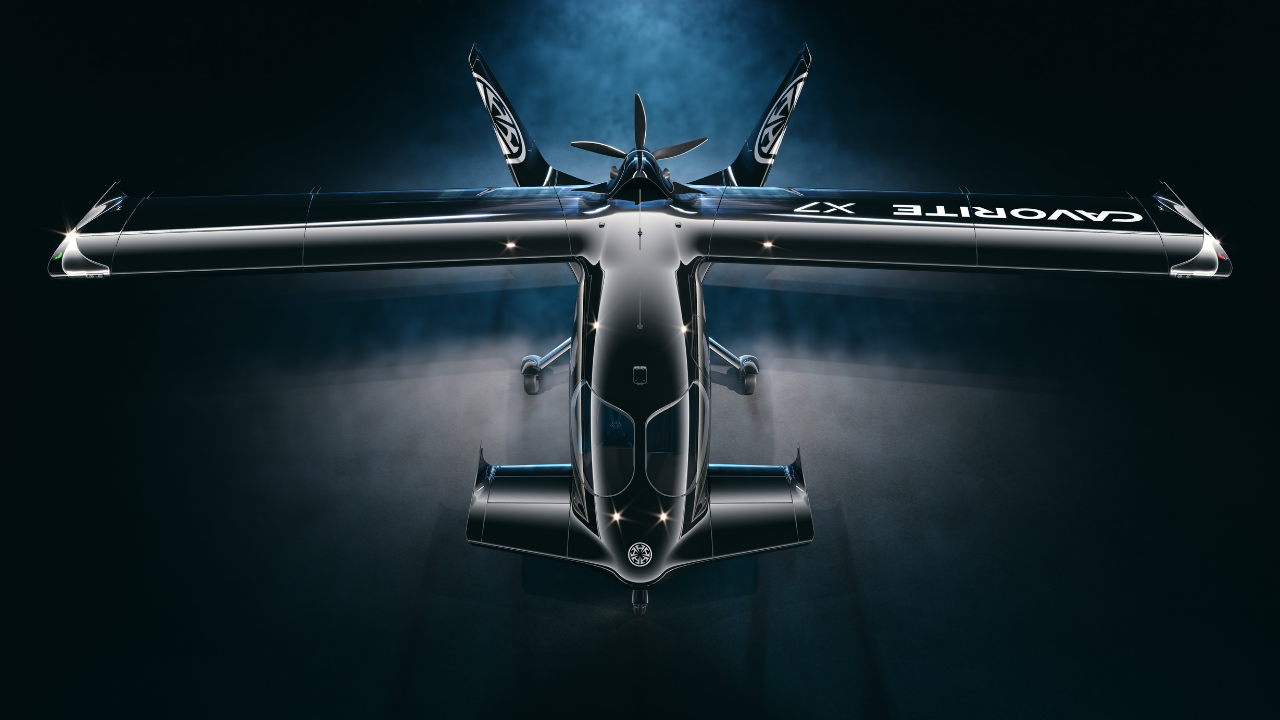
Image Credit: Horizon Aircraft.
If you're not versed in the dark arts of aeronautical engineering, the Cavorite X7 is a hybrid eVTOL. That stands for Electric Vertical Take-Off and Landing - it means it goes up like a helicopter and forward like a plane. The old design of the X7 was a proper porcupine of propulsion, sporting 14 fans. Ten were hidden in the wings, and four were shoved into the canards (those wee wings near the nose that look like a mustache). It was complex and ambitious. It was a bit mad.
But the engineers at Horizon have clearly had a sober meeting - probably involving strong coffee and a stern accountant - and decided that 14 fans was showing off. The new design has trimmed the fat. We are down to 12 fans. The four smaller fans in the canards have been given the boot, replaced by just two larger ones that match the size of their siblings in the wings.

Image Credit: Horizon Aircraft.
Why the change? It makes the X7 look slightly less like a drone that's been hitting the steroids, and it improves efficiency. Fewer fans mean fewer moving parts to break - that's a very comforting thought when you're hovering 2,000 feet above a cold lake. Horizon claims this improves manufacturing efficiency and simplifies maintenance without compromising safety. I'm not a huge fan of fixing things, so I approve.
The aerodynamic profile has been smoothed out, too. The canards and tail have been reprofiled to lower drag, helping the X7 cut through the air. When it's cruising, aerodynamic covers slide over the fans and seal the wing surface. It's a neat party trick - one minute it's a hovercraft, the next a slick fixed-wing plane.

Image Credit: Horizon Aircraft.
Inside, they've decided that passengers might actually have legs... Good call, the cabin has now been slightly extended to increase legroom, and the windows have been redesigned to improve sightlines. This is crucial. If I'm paying the estimated $5 million asking price for one of these, I want to be able to see the people stuck in traffic below me, and I want enough room to stretch my knees without kicking the pilot.
The numbers are where the Cavorite X7 stops being a science project and starts being a serious machine. Most electric air taxis have the range of a wind-up toy. You fly for twenty minutes, and then you have to plug it in and wait three hours. Not so with the X7. It's a hybrid. Once you're up in the air, a good old-fashioned gas-powered pusher propeller at the back takes over.

Image Credit: Horizon Aircraft.
This clever cheating allows the X7 to carry six passengers plus a pilot at a cruising speed of 280 mph. But the real ticket is the range - it can do 497 miles with reserves. That's New York to Toronto without stopping for a wee. Compare that to the pure electric competition, which usually falls out of the sky after about 100 miles, and you see why I'm impressed.
It's fairly compact, too. You don't need a massive runway; you just need a flat patch of ground and a bit of courage. The fans provide the vertical lift, powered by batteries, and once you're moving, the wings do the heavy lifting. It's the best of both worlds - electric quiet for the neighbors during takeoff, and gas-powered range for actually getting somewhere.

Image Credit: Horizon Aircraft.
Of course, I'm skeptical as ever. The world of eVTOLs is littered with broken promises and bankrupt companies. But Horizon seems to be playing the long game. By simplifying the design and sticking to a hybrid powertrain, they're acknowledging that battery technology isn't quite magical yet. They're building a bridge to the future rather than trying to teleport there.
Would I fly in it? With the new safety updates, the simpler fan layout, and the promise of a decent seat pitch? Aye, I probably would. I might even enjoy it.
Enjoyed the article? Give us a 'LIKE' and FOLLOW us on MSN! Or Buy us coffee :) Thank you for your support!
